Wednesday, December 29, 2010

A Good Dog is Gone - Wiley Lived a Life Better Than Most Men.

On 12/28/2010 8:15 AM, wren propp wrote:

Wiley B. Moffatt died on Monday December 27, 2010.

We'll miss her at every hike, whenever a trout is caught and released, at every meal where a steak bone is available, where ever there is a quiet patch of sun for a warm nap, on every long drive with interesting things to be seen out the window.

She loved the beach; she loved the river, she loved her man.

She was the best dog I ever knew.


Running wild on her favorite stream, the Rio Costilla at the Valle Vidal.
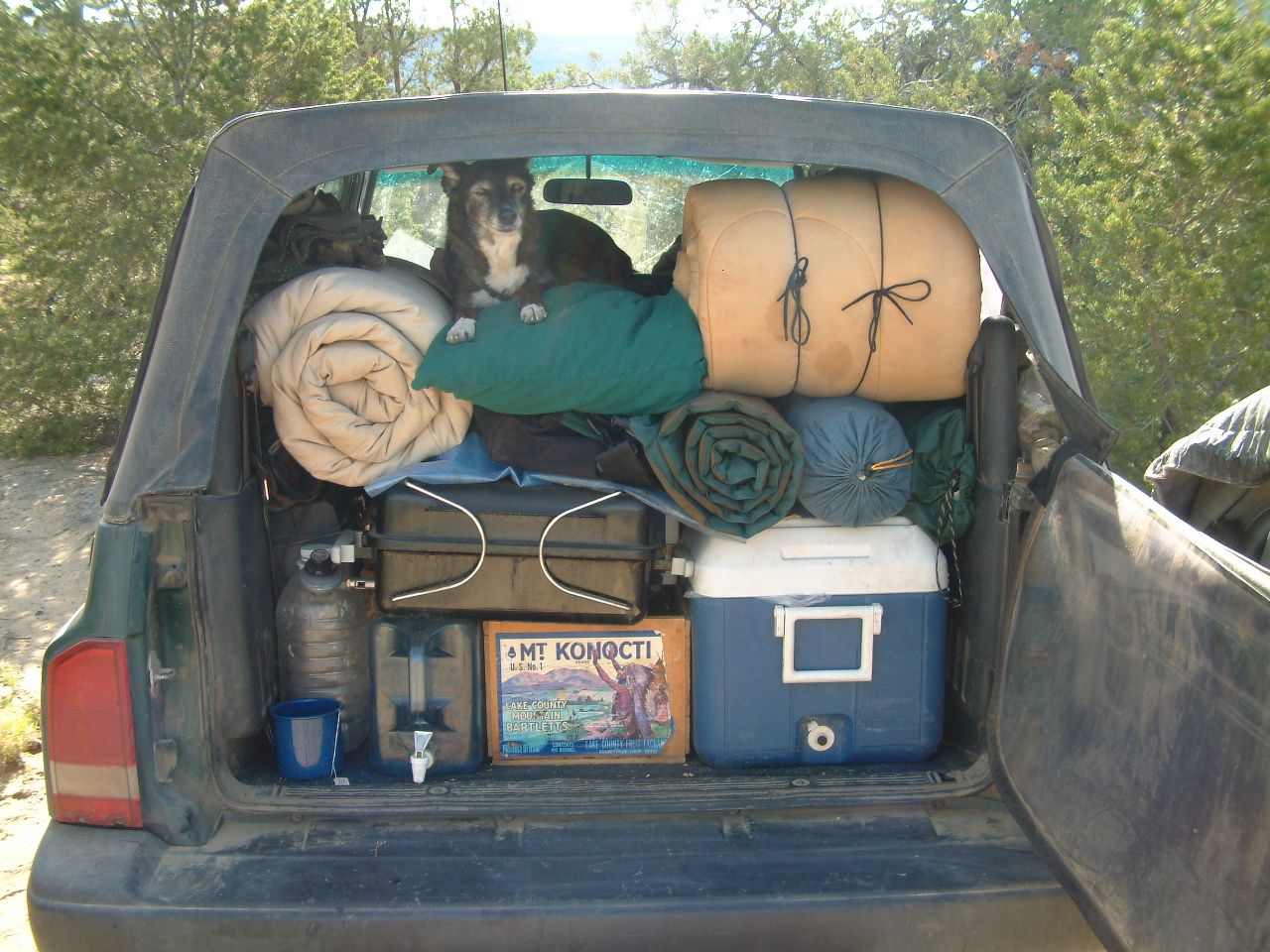
In her van with her man.

With her new best friend, Wren, on the North Platte in Wyoming.
Kind and tolerant of kids she forged special bonds.


Where she got her sunshine.

Ready to rock at all times.


Chasing bass at the Butte.


Mugging for the camera.

She loved all fishermen.
And always willing to lend a hand when it came to the van.

But napping was her specialty.


Strolling on the beach too.

And waiting on the man to catch something, anything, any time now.

She was a good dog, only barked twice that we know of and both of them had it coming to em.

Rest in Peace Wiley Dog. We love you too.

Friday, December 10, 2010

Bosque del Apache: A Winter Festival of Wildlife

By Karl Moffatt
The massive flock of snow geese all took off at once, engulfing this lone visitor to the Bosque del Apache in a swirling mass of brilliant white and the din of heavy honking.

Within minutes the birds were all gone and the air became still again.

But then the clucking calls of a few cranes drifted across a nearby field and in a moment a trio of the gangly birds could be seen landing awkwardly to join others pecking on the ground.

This is a place where wildlife can be seen every day, especially in the winter when thousands of migrating geese, cranes and ducks make it their home.

The 57,000-acre wildlife refuge just south of Socorro is managed by the U.S. Fish and Wildlife Service to provide waterfowl with ample marshland and feed to sustain them over the winter.
But the primary benefit to humans may be the endless display of wildlife that can be found here on any given day of the week.

For example during a recent visit the author had the chance to observe a coyote stalking a marshy area teeming with noisy ducks.

The coyote was watching from a ditch bank in an adjoining field and then slowly made its way through the water filled ditch and up and across the dirt road where unsuspecting spectators sat in parked cars quietly watching the ducks.

The wily coyote slinked between the cars and disappeared over the embankment, down into the brush from where it emerged again, belly dragging in the dirt as it slunk down low and crawled over to the edge of the flooded field.

The coyote was eyeing the ducks who had no idea of the danger lurking behind them as they bobbed up and down in the water.

Then the coyote leapt into the water and snatched one of the ducks with a violent shake of its head and the bird was instantly dead.

It was an impressive display of hunting prowess and gave one pause to consider the circle of life as the coyote strutted off down the road with its kill clenched in its mouth. 
Meanwhile back in the field two other coyotes were making their way over to the pond where the ducks had resumed feeding without a care. 

Moving on to other areas of the refuge along the 12-mile auto tour loop visitors will find elevated decks and blinds from which to view the birds, a boardwalk extending out into a marsh and trails to follow.

Mountain lion activity has been noted on the refuge and some areas and trails have been closed as a precaution. Pets are allowed on some areas of the refuge but must remain within a vehicle when on the auto tour loop.

A visitors' center located across the road from the tour area houses a gift shop where books, posters, snacks and beverages can be found along with an interpretive display that illustrates some of the refuge’s history and other information.

Volunteers contribute greatly to the refuge’s operation and are on hand at the visitors’ center to assist the public.

Visitors to the refuge will find other areas of interest beyond the auto tour loop including a new overlook that provides an expansive view of the refuge and surrounding wilderness areas.

The overlook is located on Route 1 just south of the visitor center, past the canyon trailhead and just beyond the railroad trestle. 
Those seeking to stretch their legs following the day of observing the birds from the confine of their cars will find numerous trails to hike including the Canyon Trail, a fairly easy, 2.2 mile roundtrip up a sandy wash to a hilltop offering excellent views, then on through an interesting side canyon and back again to the wash.

Like any high desert hike, plenty of water, a good hat and sturdy shoes are essential to enjoying the trip.

Hikers will also find the Chupadera Trail north of the visitors’ center off Route 1 provides a good three mile hike up to an overlook from where one can see more of the refuge and the surrounding countryside.

A visitor’s guide containing a rudimentary map of the refuges’ hiking trails can be obtained at the visitors’ center or from staff in the kiosk at the entrance to the auto tour loop. It costs $5 to take the tour.

And while the Bosque del Apache lends itself well to picnicking those who save their appetites will be delighted to find two of the best hamburger joints in the state, the Owl Bar and CafĂ© and the Buckhorn Tavern, in the nearby Village of San Antonio. 
Both of these longtime establishments have been serving up cold beer and great, green chile cheeseburgers to road weary travelers of I-25 and NM 380 for decades and have achieved legendary status.

Friday, December 03, 2010

Taxidermy Shop in Heart of Albuquerque a Wild Adventure

 By Karl Moffatt
Behind a nondescript storefront on Albuquerque’s Central Avenue lies an amazing wildlife display where gleaming eyes, glistening hides and snarling teeth greet astonished visitors.

“It’s my own little museum,” D.L. Gruben of American Wildlife Taxidermy says of his extensive display of hundreds of different animals from around the world, most of whom he hunted himself.

There are scary lions and bears of course, but there’s also a cuddly mama bobcat playing with her kitten, a fox arching and stretching her back upon wakening from a nap and plenty of graceful birds in flight.

It’s a magical place where visitors can get a realistic impression of wildlife right in the heart of urban Albuquerque. 


About 3,000 local school kids a year pass through the doors of Gruben’s shop to gaze in wonderment and awe at some 500 mounted animals behind glass display cases, the proprietor says.

Many are children from surrounding Indian pueblos, a lot are 4-H Club and FFA (Future Farmers of America) students and most leave amazed, Gruben says.

Gruben, 67, has been operating at the same location for forty years but got his start in taxidermy as a boy growing up on his family’s cotton farm in Rotan, Texas.

One of seven children -- three brothers and four sisters -- Gruben learned at an early age how to hunt and trap game animals and then developed an artistic knack for preserving them.

Gruben went on to attend Texas Tech University in Lubbock where he met and married his wife of 46 years, Alice, and then graduated in 1966 with a degree in animal science. The couple has two daughters, Dyanne and Deborah, who also live in Albuquerque.

Gruben, who followed in his father’s footsteps and entered the agriculture industry, started out as farm manager, overseeing livestock operations until he met and went to work for Jimmie Dean, the famous singer, actor and sausage maker.

Gruben managed Dean’s packing plant in Plainview, Texas, for several years until he decided to indulge his hobby and become a taxidermist. 

Gruben then discovered a taxidermy shop was up for sale in Albuquerque and moved to the Land of Enchantment where his business has flourished ever since.

When’s he’s not working, Gruben can usually be found hunting, either in his adopted home state, Alaska or his favorite destination, South Africa. 


Most of the mounts found in Gruben’s display cases were taken by him, including his favorite African safari trophy, a Greater Kudu, with its massive spiral horns and impressive size and markings.

There are many others, too, including a big, black, water buffalo, a rhino with a great horn and dazzling, stripped zebras.

Gruben’s shop also features a diorama behind glass representing a marsh scene in which various fish can be seen gliding about underwater while overhead, birds and other animals abound.

Gruben said he had hoped the city’s natural history museum would use some of his mounts for displays but when they didn’t, he built his own inside the shop for the public to enjoy.

Anyone is welcome to stop in, view the displays and ask questions, Gruben says.

Gruben says the art of taxidermy has come a long way since his early days in the business when the process was much more time consuming and laborious.

Nowadays, the mass production of glass eyes, specific to certain animals, has negated the need to painstakingly paint glass marbles to imitate an animal’s natural look.

And pre-formed and made to order foam bodies have replaced the need to arduously sculpt and shape a replica of an animal’s body with paper and other materials, Gruben says.

That’s good news for a shop that endeavors to process 30 mounts a week during the busy hunting season of September through January, he adds.

Nonetheless, one thing that hasn’t changed is the artistic talent one needs in order to succeed in the profession.

For example, the use of high quality paints and easily carved foam bodies has much improved the end result in the traditional mounting of a fish.

But accurately preserving a fish and honoring its appearance requires a trained eye and the skilled application of several coats of various paints to attain the depth and luminosity the fish once displayed, Gruben says. 
Martin Gaigl, 47, of Albuquerque, has been mounting fish for Gruben's customers for the last 10 years.
Gruben notes that the business of mounting a fish has definitely evolved with the times as anglers can now have a replica of a fish they have “caught and released” built to exact specifications using measurements such as girth, length and weight.

A real good photo comes in handy, too, Gruben says.

One aspect of the business Gruben does not like to indulge customers in is the mounting of dead pets.

It is very difficult to mimic the look of a live, loving pet that once had been seen and enjoyed for many years as compared with a wild animal whose actual appearance may be a mystery to many, Gruben says.

“You just can’t put the life back into them,” Gruben says with a shake of his head.

Thus he tries to talk people out of it, but still ends up doing a few every year.

One of the unforeseen pleasures of his business of late has been the use of many of his mounts by the movie industry including those seen in the bar scene of the movie “Wild Hogs”.

“Just about every movie shot here in the last ten years we’ve rented to,” Gruben says.

In another movie filmed in New Mexico featuring Eric Estrada, Gruben supplied enough mounts to recreate a hunter’s entire trophy room.

“That was pretty cool,” he says. 


Gruben says he still likes to hunt here in New Mexico when he gets the chance, noting the Gila for its trophy elk, the Lordsburg and Silver City area for its javelina hunting, the Bootheel for its diminutive Coues deer and Caracas Mesa near Dulce for trophy mule deer.

Gruben, named after his father, Danie, which accounts in part for his use of the initials D.L. before his last name, says he also enjoys working with photography and is building a website to feature photos of his many mounts.

IF You Go: From Santa Fe take I-25 south to Central Avenue in Albuquerque. Head east past the University of New Mexico and through Knob Hill to just past the La Hacienda restaurant and look for American Wildlife Taxidermy on the right at 4410 Central Avenue, SE,  just before Ron Peterson’s gun shop.

Tuesday, November 23, 2010

Longtime Fly Fishing Guide and Noted Author, Van Beacham, Offers Fall Fishing Tips

Van Beacham relaxes by the John Dunn Bridge on the Rio Grande one fine, fall, day .
By Karl Moffatt
If it’s fall and you fish, it’s time to be on the Rio Grande enjoying a warm sunny afternoon chasing hungry trout on the state’s big river.

“It’s the optimal time of year to be fishing the Rio Grande and its tributaries,” says Van Beacham, a longtime Taos area guide and author of “Flyfisher’s Guide to New Mexico.” “The weather is ideal, there’s not too much wind, it’s sunny and warm and the fish are active, trying to fatten up for the winter.”

And unlike much of the fishing season when fishing is best in the morning and evening, fall fishing is best done later in the day when the water has warmed up and the bugs come out.

“It doesn’t get any better than this,” says Beacham, 52, of San Cristobal, as he shares some fall fishing tips during a recent outing to the John Dunn Bridge on the Rio Grande just north of Taos.

Beacham comes from a long line of “fishing bums” and has been showing his clients the trick to fall fishing since he opened his first guide and fly shop in Red River back in 1983.

Beacham says the Rio Grande is most productive when fished with a streamer or spinning lures in the fall as these potentially bigger meals are much more appealing to hungry fish.

The Rio Grande, a big river lined with volcanic rock, is notorious for skunking anglers who fish it with traditional flies and nymphs.

And that’s because the fish have so many hiding spots down among the underwater rocks that getting their attention with such a small lure can be extremely difficult.

However, a twitchy streamer or flashy spinning lure is more apt to be seen and chased by hungry trout in the Rio Grande, Beacham says.


Beacham says there are no real rules to streamer fishing, the lure can be fished upstream, downstream or across with a fast, slow or balky retrieval. It can even be jigged along the bottom with an up and down motion.

“The key is to keep it moving and the rod tip low to the water,” he said. “And never stop retrieving until you can see the lure, it’s amazing how many times a fish will follow it right up to your feet.”

Streamers like wooly boogers and sculpzillas in olive and black and sizes 2 through 8 are good to have on hand and a good rod for the Rio Grande is a nine-foot, five or six weight.

When casting these bigger lures fly anglers need to adjust their technique to accommodate the extra weight. When retrieving the line, the angler strips it in with short bursts at various lengths using the free hand.

Strikes will be fast and hard and setting the hook requires an additional strip of the line, Beacham says.

The Rio Grande supports wild rainbow, brown and cutbow trout that reach sizes up to 20 inches or more, Beacham says. And pure strain Rio Grande cutthroat, trout have also recently been reintroduced to the river in an attempt to reestablish the state fish in its traditional, native, habitat.

Beacham advises those venturing down to the Rio Grande at locations such as Pilar, the John Dunn Bridge and the Wild Rivers Scenic area above Questa to avoid wearing felt-soled wading boots because of the slipperiness of the riverside rocks.

Anglers need to drink plenty of water, carry some basis survival needs such as matches, a space blanket and energy bars. They should dress in layered clothing such as a fleece jacket and a nylon shell and let someone know where you’re going as these are remote and potentially hazardous areas.

Those seeking a quieter afternoon’s angling might want to pass up the streamers and stick to nymphs and dry flies on any number of creeks feeding the Rio Grande that also fish well in the fall, Beacham says.


Streams like the Arroyo Hondo, the lower Red River and the Cimarron below Eagle Nest Lake all offer anglers good fall fishing for feisty trout on traditional tackle such a 8-foot, four weight rod armed with a short leader and a couple of flies.

Beacham recommends using a mayfly nymph tied up like a gold-ribbed hare’s ear, but in olive instead and without the gold rib. The fly can be rigged with a bead head or flashback in sizes 12 through 22.


Hung below an attractor pattern, such as an egg or worm, this can be a deadly combination when dead drifted through a pool or riffle.


And if bugs begin to hatch on the water then a size 18 to 22 olive colored or parachute Adams dry fly will usually suffice to attract a surface strike from a hungry trout most fall days, Beacham says.

Beacham says when anglers are failing to catch fish with nymphs, most of the time it’s not the fault of the fly but the size of the weight and the length to the indicator.

The nymph should be bumping along the bottom and if it’s not, either the weight should be increased, the strike indicator moved up or a combination of both. If the fly is dragging then the opposite would apply.

Successful nymph fishing requires a dead drift and good line control and one means of achieving that it to learn to high stick, a method Beacham spells out along with numerous other tips in a section of his book called Small Stream Techniques.


Beacham’s book, the second edition of which was just released with updates and a new section on pike fishing on the Rio Grande, is comprehensive in providing not only detailed information of where, how and when to fish New Mexico’s many different waters but also in providing important tips on what gear to use, additional equipment and handy packing lists.

When he’s not out fishing Beacham, who is single, enjoys dancing to western swing music and taking in the diversity of Taos’ music and restaurant scene.

Born one of three brothers and a sister to William and Jo Ann Beacham of Santa Fe in 1958, Van Beacham says he was warned as a teenager that he was doomed to be yet another one of the Beacham family’s notorious fishing bums.

“My dad warned that I’d better find a way to make some money doing it cause that’s how I was going to end up,” Beacham says.

Beacham’s great grandfather, William Beacham, was the first to sell fly fishing tackle from his hardware store in Santa Fe and sired a son who became a notorious fishing bum.

Another one of his elders, John Bengard, was the superintendent of fish hatcheries in New Mexico and designed the Lisboa Springs trout rearing facility near Pecos, Beacham says.

His grandmother was the trout hatchery superintendent’s daughter and his grandfather the fishing bum born to the hardware and fishing tackle store owner.

Beacham credits his dad, who also loved to fish, with teaching him the solitary sport at an early age.

“My earliest recollection of fishing is of him sticking a bamboo pole in my hand, a worm dangling in the water and telling me not to move,” Beacham says. “This was somewhere up on the Rio Grande.”


Later as a teenager living in Pecos where his dad was working with the state highway department, Beacham found himself frequently fly-fishing on the Forked Lightning Ranch, now in the hands of the National Park Service.

Beacham attended the Vo-Tech high school in Santa Fe where he was schooled in electronics, graduated in 1976 and first worked at Eberline Instruments, one of Santa Fe’s few industrial businesses in the factory now standing empty on Airport Rod.

Beacham tried attending an advanced electronics school in Arizona but bailed after a few months and found himself in Jackson Hole, Wyo., working as a dishwasher, shuttle driver and finally a fishing guide.

Upon his return to New Mexico his dad cashed in a life insurance policy he had taken out on his son, the fishing bum, and loaned him the money to start up his first fly shop and fishing guide service.


Beacham now provides guide services throughout northern New Mexico, southern Colorado and Wyoming and also offers membership in his private fly fishing club with leased access to private waters in all three states. See his website at www.solitaryangler.com for more information.

Sunday, November 07, 2010

Trophy Tiger Muskies in Quemado, Bluewater Lakes make for Amazing Angling

Matt Pelletier of New Mexico Muskie's Inc at Quemado Lake, Fall 2010.Photo courtesy of Pelletier.
By Karl Moffatt
It’s New Mexico’s latest fishing craze, anglers trying to catch giant, 40-inch, 20-pound tiger muskies lurking in the depths of Quemado and Bluewater lakes where they’ve been stocked to prey upon undesirable fish.

“People are coming from all over the place to catch these,” says Matt Pelletier of New Mexico Muskies Inc., a newly formed, non-profit club, dedicated to the sport. “And it’s a real rush when you get into one.”

The predators, a cross between a muskie and a pike produce a sterile hybrid that can be raised in hatcheries and then stocked in lakes to help control undesirable fish populations.
 A tiger muskie falls victim to an imitation goldfish lure.
The New Mexico Department of Game and Fish (NMDGF) has been stocking tiger muskies in Quemado and Bluewater lakes for the past several years to rid these waters of increasing populations of white sucker and goldfish.

These kinds of undesirable fish compete with sport fish, like trout, for the available habitat which in turn leads to reduced angler satisfaction at these locations. At one point Quemado Lake was virtually overrun with goldfish and trout fishing was almost nonexistent.

But the stocked tiger muskies have gone about their deadly work for several years, chasing down and eating their intended victims and some anglers have since turned to catching them, strictly on a required catch and release basis.

But the tiger muskies have done such a good job in reducing the undesirable fish populations at both lakes that the state Game Commission has recently ruled that anglers can now catch and keep a trophy size tiger muskie from either lake.
 Tiger muskies under 40-inches length have to be returned to the water.
For example, Quemado has seen its goldfish population diminish considerably as revealed during an August, 2010 NMDGF survey that picked up 34 goldfish an hour during electro-shocking. In 2008 the number was 157 goldfish an hour while in 2006 the number was much higher at 377 goldfish an hour, according to the NMDGF’s coldwater fisheries biologist, Richard Hansen.

Surveys results lead researches to believe that Quemado Lake holds a population of about 1,100 Tiger Muskies over 18-inches in length. During the fall electro shocking survey 30 tiger muskies were netted with the average size coming in at 33-inches and the largest weighing in at 19-pounds and 43-inches in length.

During the same survey 62 trout were caught with the average size being 18-inches indicating the popular sport fish is thriving in Quemado Lake despite the addition of larger predators to the environment.
 The trout have returned to Quemado Lake.
Pelletier says that’s because the tiger muskies like to eat exactly what they were introduced for, the goldfish and suckers.
That’s good news for trout anglers who in recent years may have given up on Quemado Lake.

An early November trip to the lake on a warm sunny Saturday revealed good fishing with several young tigers netted along with a trophy sized trout and a giant grass carp.
 A monster carp inadvertently hooked while trolling at Quemado Lake.
Bluewater Lake enjoys similar results and plenty of tiger muskies to be caught.

Pelletier says his organization was formed to help educate anglers about the sport and assist the state in improving, protecting and promoting the tiger muskie fisheries.

For instance, the club raised $5,400 through a grant from the Hugh C. Becker Foundation to purchase minnows to feed tiger muskies being reared at the state’s Rock Lake Fish Hatchery. This helps keep the young predators from preying on each other while raised at the hatchery.

The club boasts 56 members, welcomes new anglers and meets about once a month in the Albuquerque area. The meetings are open to the public, Pelletier says.

Anglers wishing to fish for tiger muskies should be aware of some special equipment needed to do so successfully.
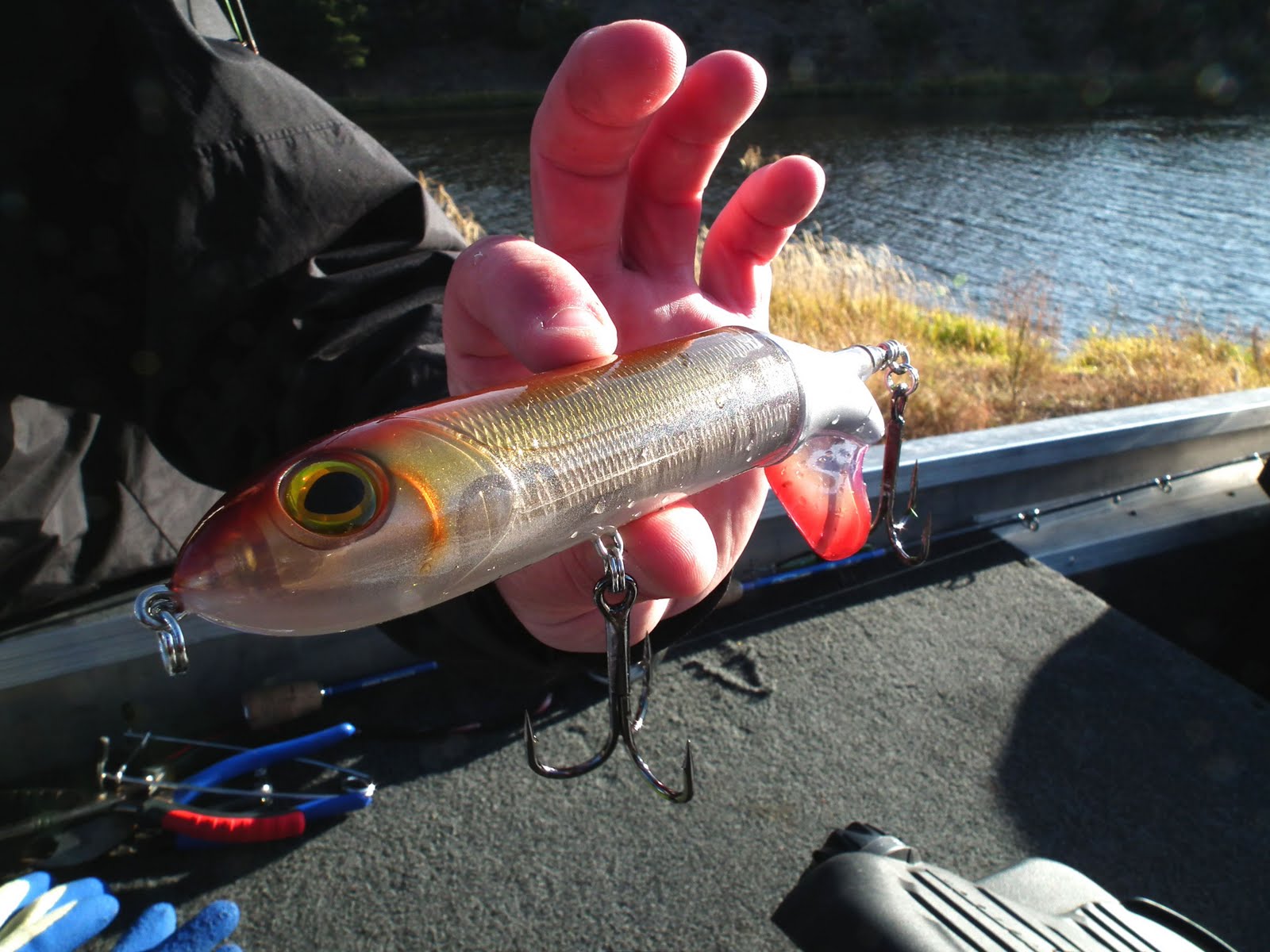
 Tiger muskie lures come in all shapes and sizes.
Anglers will need at least a seven foot long, heavyweight rod capable of handling at least a 20-weight line an one ounce lure with an open face spinning or bait casting reel. Wire leaders are recommended and typical lures would include jerk baits that resemble goldfish, suckers and perch.

Anglers should be equipped with a pair of long, needle nose pliers for dislodging hooks. A pair of heavy nippers for cutting hooks off if needed and a pair of jaw spreaders to open the fish’s mouth and get at embedded hooks.
 Tiger muskie should be handled with extreme care due to their teeth.
A very large net or preferably, a sling net, in which the fish can be cradled in the water is a necessity for handling the fish properly without harm to itself or the angler.

“We practice and preach catch and release to conserve the resource,” Pelletier says.

Those fishing for tiger muskies need to practice patience and persistence as the fish feed on a limited schedule and anglers need to have their lures in the water when that occurs, Pelletier says.
 A boat is nice but most tiger muskies are caught right from the bank, Pelletier says.
Tiger muskies have a slow metabolism and after a good sized meal may not eat again for some time which accounts for their sporadic feeding behavior.

The key to attracting a strike from a tiger muskie is to capitalize on its opportunistic, predatory instinct with jerks and motion of the lure that imitate a wounded or struggling prey, Pelletier said.

For more information about the fish, catch and release techniques and some awesome photos check out the club’s website at http://www.newmexicomuskiesinc.org.
 An Osprey enjoys a fish snatched from Quemado Lake and is another sign of a healthy fishery.

If You Go: 
From Santa Fe take I-25 south to I-40, head west to exit 89 and NM 117. Head south through the Malpais, taking time to stop and check out the BLM visitor center, the natural arch and the black lava flows. Follow this lonly stretch of blacktop down to NM 36 and on to Quemado. Head west on US 60 a short distance past town and then take NM 32 to the turnoff to Quemado Lake. Campsites with restrooms are available in the forest on the far side of the lake off Forest Road 103.

For an alternate route home, don't leave the way you came in, instead keep going past the the lake on Forest Road 13, up across Slaughter Mesa and then drop down off the mountain onto Forest Road 218 which leads to State Highway 12.  Follow the highway to the intersection of US 60 at Datil. There's a bar, cafe, general store and gas to be had here. Follow US 60 past the very large array to Magdalena and on to Socorro and I-25 north to Albuquerque and Santa Fe. A very scenic drive and then a quick ride home on the interstate.
 The Very Large Array on the Plains of San Augustin.


Popular Posts