Thursday, July 17, 2014

Brand New Aquatic Park on the San Juan River at Hammond Tract

The newly created aquatic park and recreation area at the 
Hammond Tract on the San River about 
14 miles south of Navajo Dam.
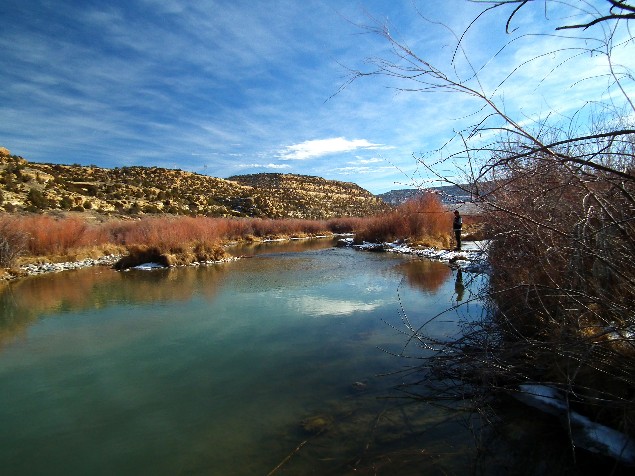
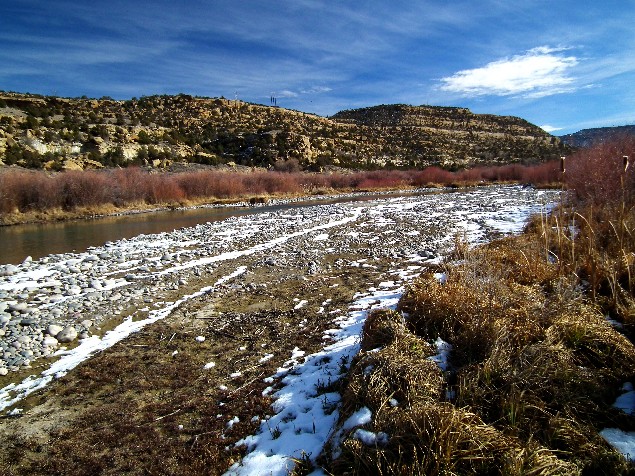
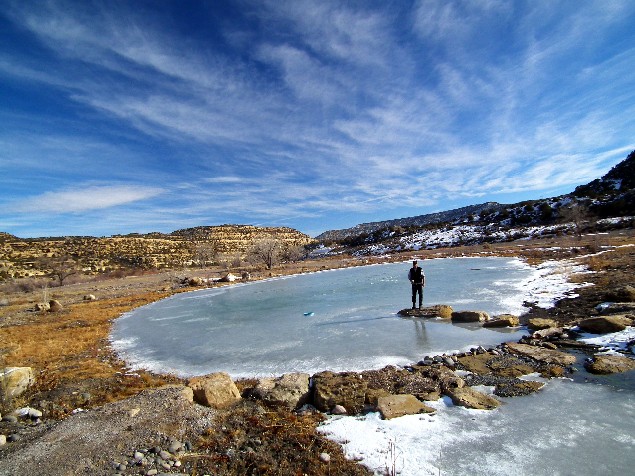
Anglers visiting the San Juan River this summer will discover a new 80-acre aquatic park featuring plenty of fishing improvements, lots of shady cottonwood trees and one of the best swimming holes on the river.

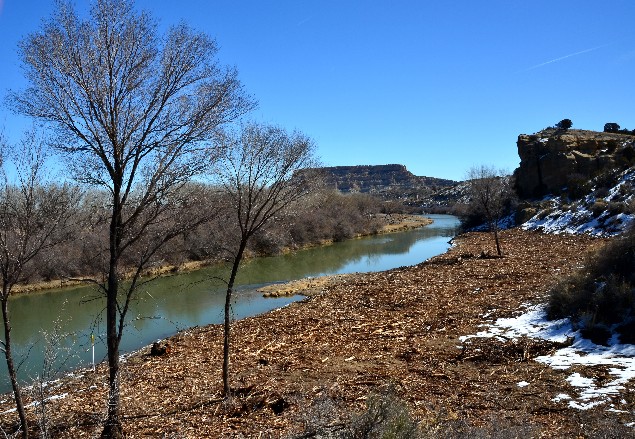
Carved out of a nearly impenetrable forest of water-robbing salt cedar and thorny Russian olive trees the state Department of Game and Fish (NMDGF) has turned its Hammond Tract into what should become a very popular recreational area.
Marc Wethington, Fisheries Biologist on the San Juan River 
for the New Mexico Department of Game and Fish,
 points out from an overlook the amount of  work
 done to clear invasive trees at Hammond Tract.
Acquired in the late 1980s from the federal government the property is located about 14 miles south of the town of Navajo Dam and for years was nothing more than a rutted dirt road ending at a hole hacked through the trees where boaters could land.

Now there’s a new concrete boat take-out ramp, an improved parking lot and a fresh outhouse. The invasive trees have been cleared away while the towering cottonwoods remain along with newly planted native vegetation.
Visitors to the Hammond Tract recreation area and aquatic park
will find a ample parking and a new outhouse for their convenience.
A small creek now flows under a canopy of cottonwood trees into a newly created pond to benefit waterfowl while 15 in-stream structures were installed in the river to improve fishing and water quality.

A new concrete boat ramp at Hammond Tract is fully
extendedinto the river and making landing
 much easier for boaters.
Visitors to the park will find a large pool in the river at the base of the parking lot created by the installation of a ring of boulders that looks like a tempting place to take a cool dip on a hot summer’s day.

A ring of boulders has created a fine wading pool in the
San Juan River at Hammond Tract where
sun baked anglers might be tempted to take a dip.

Anglers will find about a half mile of river running through the park with private property owners to the north and federally owned land to the south, says Marc Wethington, NMDGF’s  Fisheries Biologist stationed on the San Juan River.

Looking south towards the Hammond Diversion dam
visitors can see how thick the invasive Russian olive
and salt cedar trees were before being cleared.
The Hammond project is just the latest in a series of improvements Wethington has overseen in recent years on the river as the department works to maintain high quality fishing conditions despite lower flows from Navajo Dam.

From an vantage point overlooking the San Juan River at
Hammond Tract visitors looking upstream can see just
 how much area has been opened up for recreational use and
benefit to wildlife and fish.
 
The latest project now opens up a whole new area to anglers and others seeking a respite from the crowds that are commonly found on the trophy class waters just below the dam further upstream.

“The solitude here should be a real draw for those seeking some time alone on the river,” Wethington says.

At Hammond Tract one can expect to find an occasional big brown trout lurking in the depths while plenty of stocked rainbows make it an ideal place for those fishing for dinner. The surrounding scenery is bucolic with farm pastures, the Bosque and desert buttes dominating the landscape.

A newly created pond will provide habitat
for waterfowl and other wildife.
The estimated $625,000 project was funded by grants from the State Forestry and the San Juan Soil and Water Conservation District, federal wildlife and sport fish excise taxes on the sale of sporting goods, NMDGF funds and contributions from Conoco Phillips, WPX Energy and the New Mexico Sportsmen for Fish and Wildlife, said Mike Sloan Chief of Fisheries Management for the NMDGF.

The park is slated to officially reopen to the public in late July or early August to give native grasses planted on site a chance to sprout from expected monsoon rains, Sloan said.

Finding Hammond Tract is just part of the adventure. 
Hammond Tract is reached by an unmarked dirt road off NM 511 just shy of the intersection of US 64. There is no sign for the NMDGF property yet.

Those traveling southwest from Navajo Dam will find it after passing through the village of Turley and climbing a hill marked by a bright green house trailer.  The road will be on the right just under the high power lines, turn in and stay to the left, follow to the power sub-station and then take the turnoff down to the river.

Coming from US 64 visitors will  go 9/10ths of a mile on NM511 and pass two oil and gas well sites on the left before reaching the power lines crossing the road and the turnoff to the left.
Those fishing at Hammond Tract are encouraged to release
 any native brown trout caught in this area as they reproduce
naturally in the river which contributes to making it one of
the best fisheries in the west.The river here will receive
 regular stockings of hybrid rainbow trout of which
anglers can keep up to five a day.
 
This article was originally published in the Albuquerque Journal's "Go" outdoors sports section and can be seen at http://www.abqjournal.com/430413/sports/go/angling-or-solitude.html.

Saturday, June 21, 2014

On Fishing the Rio Grande Gorge with John Nichols and Taylor Streit


For many anglers New Mexico’s Rio Grande gorge and its tumbling river is an intimidating and stingy place to fish.

Its reputation for skunking even seasoned anglers may cause some to pass it up for easier fare elsewhere.

But those who’ve managed to overcome this maddening river’s mysterious ways say the fishing can reach mystical proportions.

And perhaps no one knows that better than longtime friends, fishermen and fellow writers, Taylor Streit and John Nichols, both of Taos.

Angling authors and fishing buddies, John Nichols and Taylor Streit.
Nichols was one of those guys who could be found fishing the river in cheap sneakers and jeans with the cuffs rolled up back in the 1970’s.

Rods were made of fiberglass then, leaders from “cat-gut” and reels made by Martin.

In those days Nichols could be seen bouncing along rutted roads on the rim of Rio Grande Gorge in a low slung, four door, Chevy Impala looking for new ways down to the river.


He carried no net, used crude, nameless flies and lunched on bologna sandwiches washed down with warm Coke.

Nichols fished the late afternoons and loved hopping from one slippery boulder to another to fish the foaming pools.

He loaded his line with a duo of wet flies, “skittered” them across the surface on a short leader and “cleaned up” on a regular basis.

Nichols shows his off his "skittering" technique during a recent 
visit to the Rio Grande at the Taos Junction Bridge.
Streit in the meantime had opened a fly shop in Taos and was building a name for himself as one of the Rio Grande’s best fishing guides.

Ironically both men learned to fish the Rio Grande from legendary local angler, Charley Reynolds, but they rarely had occasion to do it together.

That’s because Streit spent his days guiding clients while Nichols was home in bed after writing all night.

But they became longtime friends after meeting at Streit’s fly shop where they often compared notes and exchanged tales.

These days Nichols, 73, doesn’t fish his beloved river much anymore. A chronic inner ear problem makes it difficult to keep his balance on the river’s tricky terrain.

But his friend Streit, 67, took him out during last year’s caddis hatch to a gentle stretch of the river near Manby Hot Springs.

They got into a few trout that day and Nichols says hopes to do it again this year too.

But more recently the two were able to get together down on the Rio Grande at Pilar where they were asked what the secret was to fishing the big river?

The hell with you, buy our books, they said.

Say what?
Streit’s guidebook “Fly Fish New Mexico,” and his instructional manual “Instinctive Fly Fishing” are essential reading for any angler.

But it’s his book “Man vs Fish” where one can read more about a rare day of day of fishing the Rio Grande with Nichols, the man whom Streit says knows more about the river than even him.

To many Nichols, 73, is best known for penning his trilogy of fictional northern New Mexico based novels, the “Milagro Beanfield War,” “The Magic Journey” and “The Nirvana Blues.”

But others might be even more inclined to know Nichols from his trilogy of memoirs, “If Mountains Die,” “The Last Beautiful Days of Autumn” and “On the Mesa.”

In those books one can gain some insight into Nichols’ world and also learn a lot of what it takes to fish the mercurial Rio Grande.

Nichols notes in “Last Beautiful Days of Autumn” that entering the gorge “is like walking into both a physical and spiritual meat grinder” where “there is no end to the fabled calamities of this mighty river.”

The Rio Grande at the bottom of Chiflo Trail
 in the Wild Rivers Recreation Area.
And with his trademark humor and irony Nichols proceeds to recount all of the things that can and will go wrong while fishing down in the Rio Grande gorge.

Busted rods, missing reels, spills and the ever-present fear of an encounter with a rattlesnake.

“You know I never did meet one during all those years,” he says now.

And while much has changed in recent years on the Rio Grande even more has remained the same, Nichols says.

“It’s still a rugged, remote, challenging river where half the battle is getting there,” he says. “That’s what I loved about it, the work involved and the triumph of surviving it.”

Nichols “skittering” technique involves the use of a short leader from which two or even three wet flies are dangling. The rig is then twitched across the top and just under the surface of the water to entice a trout to strike.

A typical wet fly employed by Nichols for use 
while "skittering" for trout on the Rio Grande.
Nichols says the technique works best in the roiling waters found among the boulder fields of the river.

One of his favorite spots is the run between Little and Big Arsenic Springs campgrounds in the Wild Rivers Recreation Area near Cerro.

Nichols says the key to successfully fishing the Rio Grande is to be alert and prepared.

Always let someone know where you’re going and carry matches, a poncho, sweater and windbreaker, polarized sunglasses and water.

Other than that, pack as lightly as possible and leave the waders behind, Nichols suggests.

“Just watch your step, the basalt rock down there is very slippery when wet,” he warns. “Try not to fall in.”

Nichols says the fishing is actually pretty easy once you get down there and if the sun is off the water it can be really good.

Streit agrees with Nichols that the Rio Grande fishes best in the shade and that an angler can do better in the more remote areas of the gorge.

By simply hiking a couple miles up the canyon from either the Taos Junction Bridge at Pilar or the John Dunn Bridge at Arroyo Hondo an angler can find unspoiled water and great fishing, Streit says.

The John Dunn bridge on the Rio Grande at Arroyo Hondo
“There are still places on this river where the trout have never been caught,” says Streit. ”And we’re still finding new ways to get to them.”

The Rio Grande Gorge and its stunning scenery is now protected from most commercial development under its designation by President Barack Obama last year as a national monument.

And the long neglected campgrounds and day use areas along the river at the Orilla Verde Recreation Area near Pilar have received much needed facelifts.

The Rio Grande Gorge Visitors Center on NM 68 at Pilar 
is a great place to find more information about recreation 
and other attractions in the area.
The popular nine mile stretch of river between the Taos Junction Bridge at Pilar and County Line takeout downstream was stocked with some 30,000 catchable size rainbow trout over the course of the season last year, says Eric Frey, Sportfish Program Manager for the New Mexico Department of Game and Fish.

But the upper stretches of the river between the Wild Rivers Recreation Area and John Dunn Bridge have been stocked in recent years with native cutthroat trout, Frey said.

The cutthroat plantings have produced a population that is now reaching the 14 to 16-inch range and with time could rival some of the bigger browns found in the river.

The department is working to reintroduce cutthroats back into their native habitat throughout the state and wants to provide anglers with the opportunity to catch them, Frey said.

A Rio Grande Cutthroat. Photo courtesy of Toner Mitchell of www.truchacabra.com.
An unintended but added benefit of stocking cutthroats into the Rio Grande is that they can now breed with the wild rainbows to produce a very colorful, hard fighting and drought tolerant fish, Frey said.

The Rio Grande is holding a lot of fish these days, Frey says.

The most recent electro-shocking survey on the river back in 2008 revealed a healthy amount of trout in the 8 mile stretch of river between La Junta and the John Dunn bridge, Frey said.

Eric Frey, Sportfish Program Manager 
for the New Mexico Department of Game and Fish.
The survey revealed about 1,400 trout per mile with twice as many browns as rainbows and some monsters in 25-inch range, Frey said.

The survey recorded catching almost three times as many fish per mile in the remote 16-mile stretch between the John Dunn and Taos Junction bridges, Frey said.

Veteran Rio Grande Fishing Guide, Streit, says the long running drought has actually improved fishing on the river.
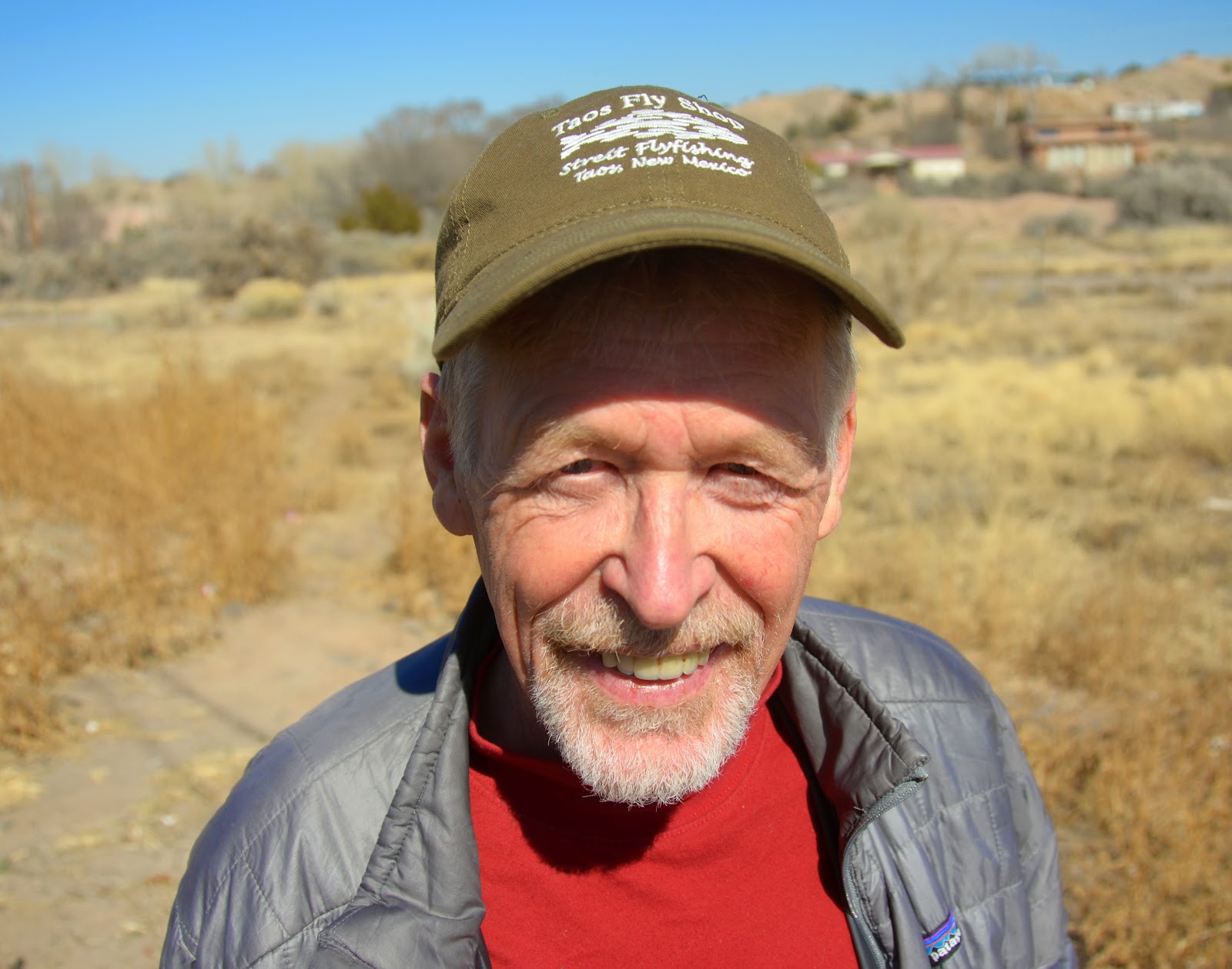
Taylor Streit.
There’s less spring runoff carrying silt and sediment into the river so it’s running clearer more often which allows for extra fishing days.

“I’ve never seen it fish any better than it is right now,” Streit says.

Originally published in the Spring 2014 edition of the New Mexico Department of Game and Fish publication "New Mexico Wildlife." 

Monday, June 02, 2014

Pecos Wilderness Offers Backcountry Adventures

Pecos Wilderness. Photo courtesy of  of www.outspire.com
 The Pecos Wilderness offers great outdoor recreation including leisurely horseback rides, invigorating hikes, awesome fishing and secluded camping amid some of the most impressive scenery in northern New Mexico.

“A trip into the Pecos Wilderness can really take you away from it all,” says Sarah Naegele, a backcountry specialist with the Santa Fe National Forest. “We’ve got spectacular mountain lakes, awesome panoramic views and the opportunity for some real solitude.”

And there’s plenty of friendly folks willing and able to help visitors enjoy everything the Pecos Wilderness has to offer.

A good looking horse. Photo by Karl Moffatt courtesy of www.licensedtofish.com

Trail Rides:

A trip into the backcountry on horseback is just the ticket for those seeking an authentic western experience.

Riding high aboard a sure-footed horse is a comfortable way to enjoy the scenery while getting into the wilderness.

And Circle S Stables has been taking guests on rides into the forest and meadows of the Pecos Wilderness for over 25 years now, says Lou Storey who runs the business along with her son, Kraig.

Circle S Stables provides many services including half and full day horseback trail rides, pack-in service for campers and fully outfitted hunting, fishing and camping trips.

Anglers can enjoy good fishing in spectacular meadow settings on both the Mora or Pecos rivers and Circle S Stables can get them there with plenty of time to spend on the water, Storey says.

Hard working pack horses & mules. Photo by Mary Caperton Morton of
  www.blondcoyote.com.
Storey said she’ll offer a special discounted rate this summer to readers of the Las Vegas Optic for anglers who want to fish and camp out at Mora Flats for a few days or more.

Storey said she’d be happy to take a couple of anglers and their supplies in on horseback, drop them off and then pick them up later for only $500 a head.

“That’d make for an affordable and fun vacation,” she says.

Visitors interested in horse trips and camping in other areas of the wilderness need only speak with Storey to discuss the options available.

“We’re here to make sure folks really enjoy our great outdoors and have fond, lasting memories of their visit,” Storey says.

The Pecos River. Photo courtesy of Karen Denison of www.outspire.com
Circle S Stables is located just outside of the Pecos Wilderness boundary on Iron Gate Road north of the village of Pecos. Operations begin Memorial Day weekend and run through late October.

See Circle S Stables website at www.circlesridingstable.com for more details or call them at (505) 757-8440.

Guided Hikes:

Some folks might just want to wander on foot through the Pecos Wilderness for the day but they need a guide to help point out the way.

That’s why the folks at Outspire are in business, to help wanderers enjoy the many wonderful hikes available in northern New Mexico, says owner Karen Denison.

Karen Denison. Photo courtesy of www.outspire.com
The professional guides at Outspire have a special fondness for hiking into the Pecos Wilderness especially out onto Hamilton Mesa.

“Being on foot you just tend to see more,” Denison says. “Like all the wildlfowers.”

Hikers need only enthusiasm and physical ability to enjoy much what the backcountry offers including its sweeping views and refreshing environment, Denison says.

Outspire caters to its guest by providing bottled water and snacks and can make arrangement to provide box lunches too.

Outspire can provide day packs, ponchos and trekking poles too. Guides are first-aid certified also.

“All they really need is to bring a camera and let’s get out there,” she says.

Denison says all of her hikes are custom based on the customer’s desires and abilities.

Many are seeking solitude, wildlife and scenic viewing which are abundant in the Pecos Wilderness, she says.

A hiker enjoys the view found in the Pecos back country. Photo courtesy of  of www.outspire.com
A trip out across Hamilton Mesa provides the opportunity for all and guides provide history, geology and other insights along the way.

“And it’s possible to spend a whole day on your lonesome,” she says.

A full-day outing for a couple costs a little over $300 while the pleasant memories remain free for a lifetime.

See Outspire’s website at www.outspire.com for more information or call Denison at (505) 660-0394.

Guided Backpacking:

Sometimes a day on the trail and a night in the woods accompanied by a caring companion with an understanding ear is just what the doctor ordered, says Larry Glover of The Wild Resiliency Institute.

Larry Glover poses for a group photo from a recent wilderness retreat. Photo courtesy of  the Wild Resiliency Institute @ http://wildresiliency.com.
Glover, a Licensed Independent Social Worker (LISW) and Wilderness Therapist, uses overnight backpacking trips for people to reconnect, renew and rebuild themselves.

“My trips are geared around personal reflection and creating space and time for that self-renewal,” the former forest firefighter, river raft runner and outward bound instructor says.

It’s hiking and camping with a spiritual bent, a good time to question everything and hash it out with an experienced life coach.

You can’t beat the scenery either, Glover notes.

Photo by Karl Moffatt.Courtesy of www.outdoorsnewmexico.com
Glover utilizes poetry, ecology, mythology and positive psychology to connect with his clients and all camping gear and provisions are provided.
A two night camping excursion will cost about $500 although Glover says he is more than happy to work with people depending on their means.

Glover also offers a popular, annual, “Soul Renewal Wilderness Retreat” and more info including customer testimonials about it can be found on his website at www.wildresiliency.com. Glover can be reached by telephone at 505-466-1813.

Some special rules and regulations regarding camping apply to those visiting the Pecos Wilderness but there is no back country permit required.

Contact the Pecos or Las Vegas Ranger Districts at 505- 757-6121 and 505 425-3534 respectively for more info before going.

See the “Leave No Trace” website at lnt.org for the seven principles for reducing impact while enjoying the outdoors.

Originally published in the Las Vegas Optic 2014 summer guide which can be seen in its entirety at http://www.lasvegasoptic.com/content/2014-summer-destinations. Reprinted with permission.


Saturday, May 17, 2014

Spring Fishing a Best Bet as NM Heads into 4th Yr. of Drought

Robin Vigil, 57, of Santa Fe enjoys an afternoon of early spring angling on the Rio Grande at Pilar where the fishing has been reported as excellent. 
Anglers may find fishing a whole lot harder this season due to a lack of spring runoff, damage from forest fires and the persistent drought.

“It’s going to be a tough summer,” said Richard Hansen, Coldwater Fisheries Supervisor for the New Mexico Department of Game and Fish (NMDGF). “This spring may be your best bet.”

The Jemez Mountains are popular for spring fishing as its streams are usually the first to clear of snowpack runoff.

“They should be ripping along right now,” Hansen said. “But they aren’t.”

The lack of winter snow may mean many Jemez streams will suffer from low flows and high water temperatures as the season progresses, he said.

And that’s not good for trout that need clear, cold, water to survive.

The lack of quality water for trout may be in short supply on many of northern New Mexico streams this fishing season, Hansen said.
Richard Hansen, Coldwater Fisheries Supervisor for the New Mexico Department of Game and Fish (NMDGF).
For example the popular fly-fishing program on about three miles of Pecos River flowing through the Pecos National Historical Park (PNHP) outside of Santa Fe remains suspended because of flood damage from the devastating Tres Lagunas fire last summer.

An electro-shocking survey of the river by park staff and NMDGF workers this past fall failed to find any fish to speak of in the wake of the silt and debris laden floods, said Charlie Strickfaden, Acting Superintendent at PNHP.

And unlike the NMDGF which can restock damaged fishing waters once they’ve recovered, national park policy precludes it from stocking non-native game fish such as rainbow and brown trout, Strickfaden said.

Park staff consulted with NMDGF about the possibility of restocking the river with native cutthroat trout but the current poor water conditions may not allow that either.

Park staff will have to re-evaluate the situation again next fall to determine what their future options are, Strickfaden said.

An lone angler enjoys a day on the river at the Pecos National Historical Park during better days.
And while fishing on the Pecos River below Tererro was heavily damaged by flooding and could take years to recover, the upper stretches of the river are in good condition and have been heavily stocked by NMDGF to provide anglers opportunities there.

Another victim of post fire flooding is Nambe Lake, a popular local fishing hole known for fat trout and plenty of them, it too remains closed this season due to heavy flood damage and a massive fish kill following the Pacheco Canyon Fire in 2011.

In the meantime the Nambe Falls camping and picnic area remains open to the public, says Nambe Pueblo Chief Tribal Ranger, Joe Vigil.

Nambe Lake has long been a great spot to fish for trout in the hills above the tribal village.
But amid all the dire news there remains some encouraging angling prospects.

“If there’s a silver lining to this drought it’s how well the Rio Grande has been fishing lately,” says Nick Streit, 33, who operates the Taos Fly Shop and now co-owns the Reel Life fly shop of Santa Fe which recently moved from Sanbusco Market to DeVargas Center.

A lack of spring runoff over the past few years has resulted in consistent, clear flows on the big river which has in turn produced some awfully good fishing, Streit says.

“It’s fishing better now than it has in my life time,” he said.

The Rio Grande gorge features some 60 miles of prime fishing between the Wild Rivers Recreation Area near Questa to the Orilla Verde Recreation Area at Pilar.
The Rio Grande Gorge between Espanola and Pilar.
And then there’s always the San Juan River below Navajo Dam in northwestern New Mexico where high quality trout fishing continues due in part to the recent installation of numerous habitat improvement projects designed to ease the impact of recent lower stream flows.

Hanson of the NMDGF noted that the department’s hatcheries will continue to raise fish this season but will only stock them in waters that can support them.

“So we may see some waters go offline,” he said. “And we’re also anticipating we’ll see some forest closures due to the drought, flooding and fires.”
The Pacheco Canyon fire erupts in the forest surrounding Santa Fe during the summer of 2011.
New Mexico is heading into its fourth year of continuous drought with 65-percent of the state classified as severe or extreme, says Kerry Jones of the National Weather Service in Albuquerque.

This winter’s mountain snowfall was dismally short with many basins reporting 40-percent or less of normal snowpack. The resultant lack of spring runoff has thus failed to replenish reservoirs around the state which continue to remain woefully short of water, Jones said.

But while the drought will likely persist through summer there is some chance that an El Nino weather pattern will reappear next winter and possibly bring heavier snows to the mountains.

“And that’s what we need,” Jones says. “The monsoons may have saved us from catastrophe last September but they’re not the answer to our long term problem. What we really need is really good winter snows to break this drought.”

In the meantime anglers are reminded that it’s time to renew their licenses and get out there while the fishing is still good.


Tuesday, March 11, 2014

San Juan River Taking on a Whole New Look

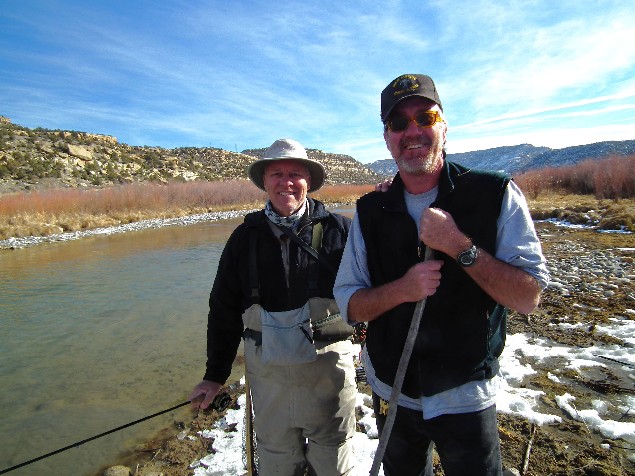
Angler Mike Lee of Arizona and Marc Wethington, Fisheries Biologist on the San Juan River for the New Mexico Department of Game and Fish, pose or a photo on the Lower Flats in Dec. 2013.
 It’s the dead of winter and Mike Lee of Arizona is catching big beautiful trout on dry flies at the Lower Flats of the San Juan River in northwestern New Mexico and state fisheries biologist Marc Wethington couldn’t be happier for him.

“This is some of the best fishing in the west,” said Lee, a 62-year-old retired school teacher, as he chatted with Wethington on the banks for the river below Navajo Dam. “All the fish that I’ve caught here have looked really healthy and there’s been plenty of them.”

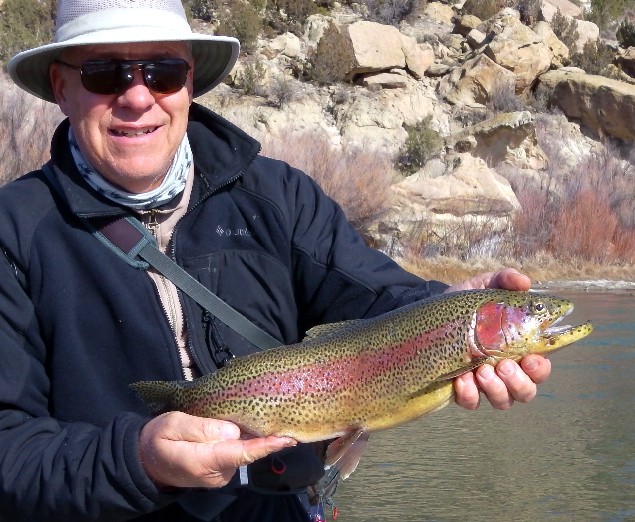
man with trout
Mike Lee of Arizona shows off a nice Rainbow trout he caught on the San Juan River in late winter of 2013. Lee spent a total of eight weeks fishing on the river that year. Photo courtesy of Mike Lee.

But that’s just what Wethington and the state Game and Fish Department (NMDGF) have been preparing for over the last decade.

“It’s reassuring to see that many of our habitat improvement projects have worked as intended,” said Wethington, 50, who has been stationed on the San Juan since beginning his career with NMDGF back in 1995.

Wethington has since overseen four major habitat improvement projects on five miles of the state’s prized trophy trout waters to improve fish habitat and maintain high quality angling during lower flows.

“We’ve been champions of this work since day one, “said Larry Johnson of the San Juan River Guides Association.” And they’ve really paid off.”

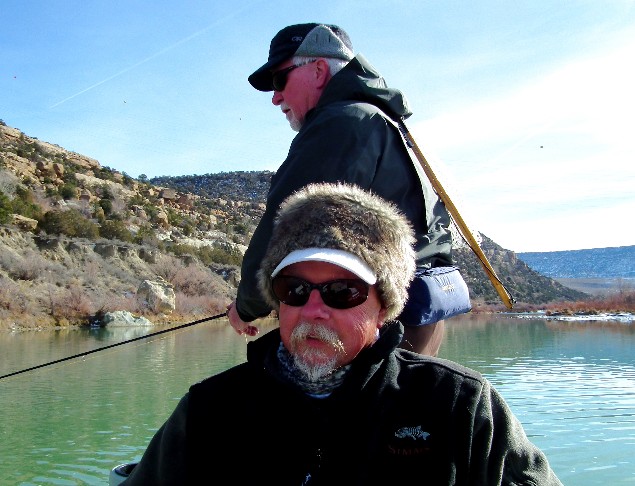
man in furry hat driving boat
Larry Johnson of Soaring Eagle Lodge rows while fishing buddy Tim McCarthy of Albuquerque fishes on the San Juan River in late December 2013.
 Johnson said despite the low flows this year anglers enjoyed great fishing in the Braids area due to improvements made there.

And there’s great fishing to be found right on the door step of the Gravel Pit take-out due to improvements in the area below Simon Canyon.

“Back in the old days we’d just row right through there without stopping, it was so dead,” he said.

Now the river below Duranglers Corner features lots of fish and some of the best dry fly action on the river, Johnson said.

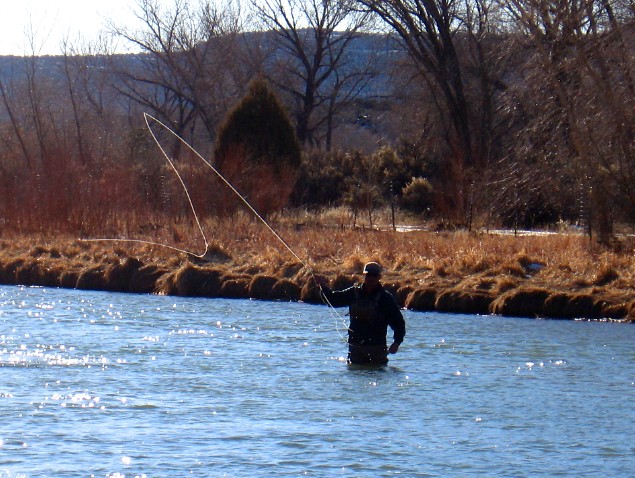
man casting a fly rod
An angler casts for trout in a rejuvenated area of the San Juan River below Duranglers Corner in 2013. Habitat improvements there have created excellent fishing with dry flies.
 And in the meantime Wethington is looking forward to see how well the department’s latest effort to improve fish and wildfowl habitat on the river’s back channels will work out.

The latest project involved narrowing and deepening the two back channels running between Texas Hole and the Lower Flats and on down to Baetis Bend to improve habitat for trout and angling for the public.

man standing by river
Marc Wethington, NMDGF Fisheris Biologist for the San Juan River below Navajo Dam in northwestern New Mexico surveys habitat improvements on the back channel below Texas Hole in December 2013.
 “It looks better now than it did at twice the flow,” Wethington remarked while inspecting the work recently.

Workers added cobble and other natural material to the banks to narrow the channel and dug out some of the pools to allow fish that find their way into the back channels to thrive there even under lower flows.

bank of river
Cobble added to the back channel banks narrowed the channel to increase depth and provide better habitat for trout.
 And that means more fishing opportunities for anglers seeking to escape the crowds that one can expect to encounter on the state’s most popular trout fishery.

The same project also resulted in the expansion of a marsh upstream of the Baetis Bend parking lot where several interconnected ponds were created and native vegetation introduced to provide more wetland habitat for waterfowl.

man on rock in pond
Marc Wethington, NMDGF Fisheries Biologist stands on a rock above one of several ponds created to benefit waterfowl near Baetis Bend on the San Juan River. Native vegetation such as willows, sedges and rushes were planted also and should begin to appear this spring.
 The wetland project should benefit bird watchers and hunters alike and might even hold fish someday, Wethington said.

But it may be the Department’s efforts some 14 miles downstream of Navajo Dam at the Hammond Tract that could prove to be the most alluring to anglers as it opens up a whole other stretch of river to fishing.

san juan river hammond tract
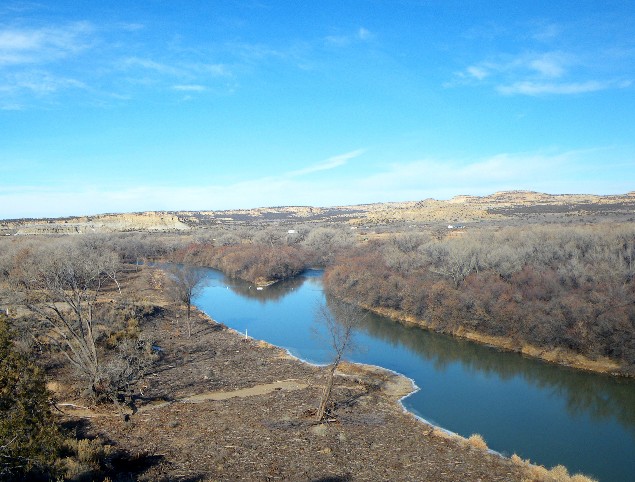
The far bank is what this area looked like before crews took to cutting down the Salt Cedar and Russian Olive trees last year.
 Since the late 1980s the department has owned an 80 acre parcel including about a mile of riverfront just upstream of the Hammond Diversion which had provided San Juan River boaters with a rudimentary takeout.

But the riverbank there has long been impenetrable due to dense stands of water robbing, non-native Salt Cedar and Russian Olive trees and the boat take-out was nothing more a small opening hacked through to the river.

mw & salt cedar stump
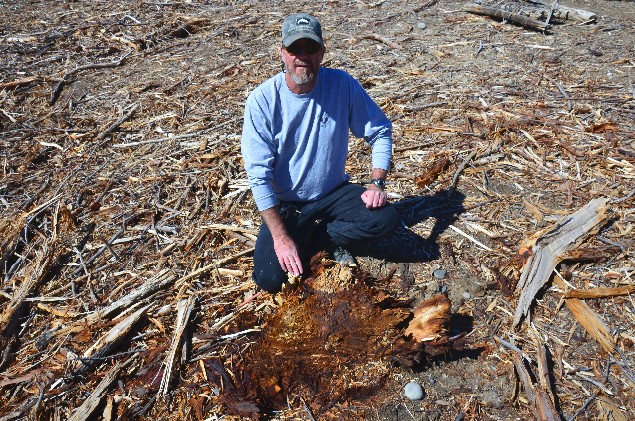
Marc Wethington of the NMDGF poses by the stump of what had been a huge salt cedar tree cut down on the riverbank of the San Juan River at the Hammond Tract in an effort to eliminate the water robbing, invasive species of trees and improve fishing access to the area.

Only the hardiest of die-hard anglers frequented this spot due to the conditions.

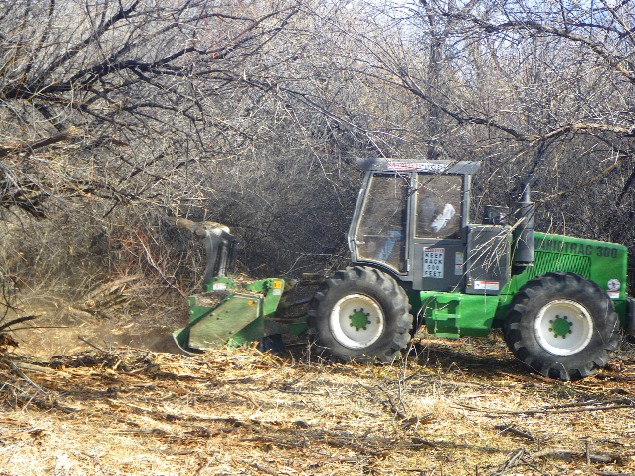
But last year work began on clearing the riverfront area of the invasive trees thanks to funding from the state forestry division. The work has since opened up the entire south bank of the river and continues on the north side this year.

Crews cut a swath through the dense underbrush and trees alongside the San Juan River at the Hammond Tract. Photo courtesy of Marc Wethington.
 The river at the Hammond take-out already features some pretty decent trout water but is slated to receive in-stream habitat improvements to make it even better.

san juan river hammond tract run
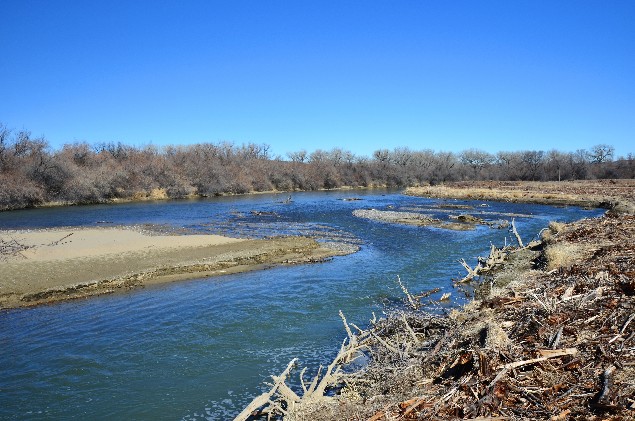
One of the nice runs at the Hammond Tract on the San Juan River.
 And the take-out and parking lot will be upgraded during the process also, Wethington added.

The far bank of the Hammond Tract on the San Juan River should be clear of the dense stand of invasive trees later this year and work will continue to install in-stream fish habitat  improvements and stocking to improve angling.
The far bank of the Hammond Tract on the San Juan River should be clear of the dense stand of invasive trees later this year and work will continue to install in-stream fish habitat improvements and stocking to improve angling on this revitalized section of the San Juan River.Photo courtesy of Marc Wethington, NMDGF.
 The projects are all part of an estimated $1.2 million in improvements the river has seen in recent years funded through federal taxes on fishing and boating equipment, state legislative appropriations and donations of manpower, equipment and money from the oil and gas industry and sporting and  conservation organizations.

The San Juan River has long been a top trout fishing destination for anglers due to a huge population of large trout of and many miles of public access.  The river’s draw brings in an estimated $40 million to the state’s economy annually, according to a New Mexico State University economic study.

karl moffatt and a san juan trout
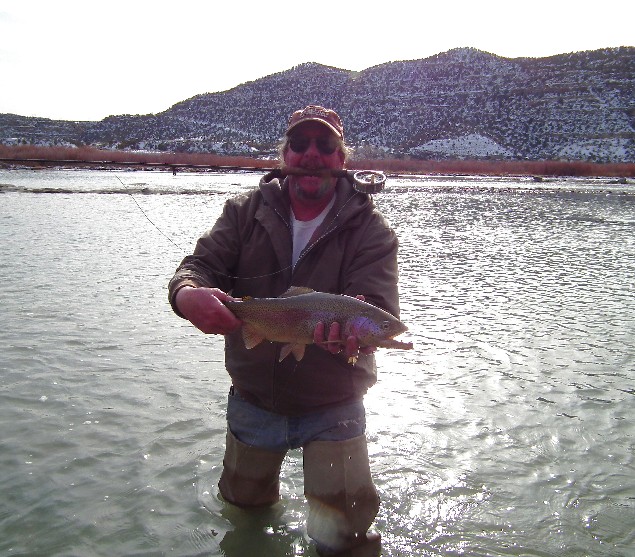
The author shows off a fat San Juan Rainbow trout picked up on a dry fly during a Baetis hatch on the Lower Flats of the San Juan River in December 2013. Photo courtesy of Tim McCarthy.

Popular Posts