Tuesday, March 11, 2014

San Juan River Taking on a Whole New Look

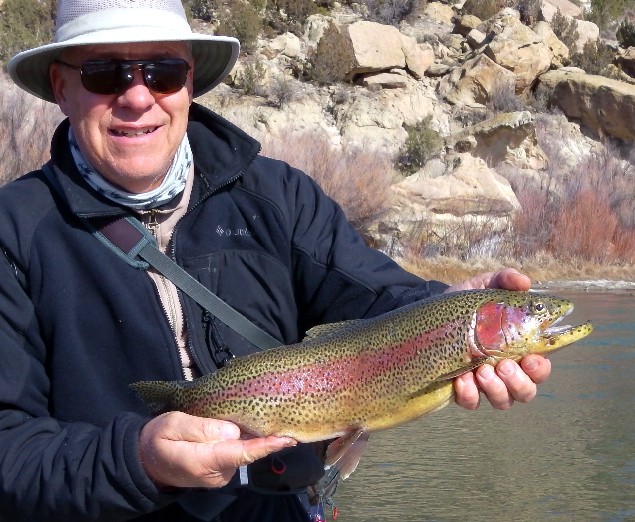
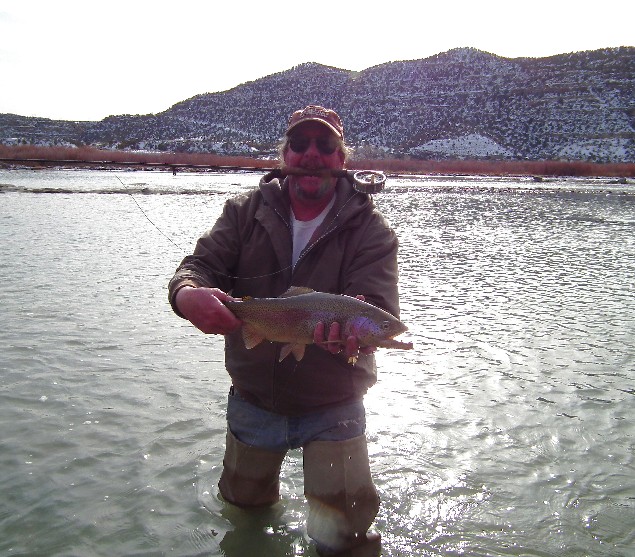
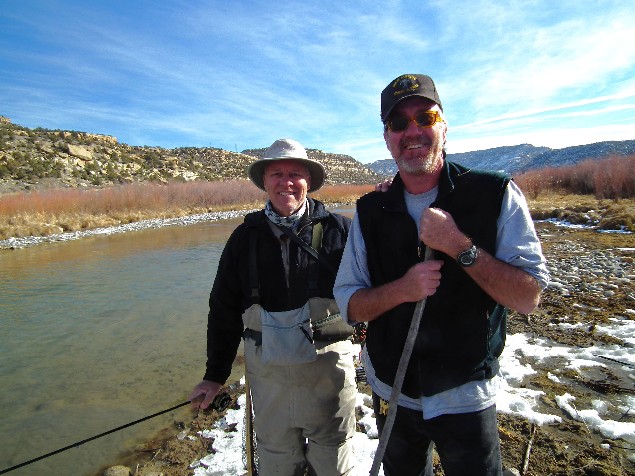
Angler Mike Lee of Arizona and Marc Wethington, Fisheries Biologist on the San Juan River for the New Mexico Department of Game and Fish, pose or a photo on the Lower Flats in Dec. 2013.
 It’s the dead of winter and Mike Lee of Arizona is catching big beautiful trout on dry flies at the Lower Flats of the San Juan River in northwestern New Mexico and state fisheries biologist Marc Wethington couldn’t be happier for him.

“This is some of the best fishing in the west,” said Lee, a 62-year-old retired school teacher, as he chatted with Wethington on the banks for the river below Navajo Dam. “All the fish that I’ve caught here have looked really healthy and there’s been plenty of them.”

man with trout
Mike Lee of Arizona shows off a nice Rainbow trout he caught on the San Juan River in late winter of 2013. Lee spent a total of eight weeks fishing on the river that year. Photo courtesy of Mike Lee.

But that’s just what Wethington and the state Game and Fish Department (NMDGF) have been preparing for over the last decade.

“It’s reassuring to see that many of our habitat improvement projects have worked as intended,” said Wethington, 50, who has been stationed on the San Juan since beginning his career with NMDGF back in 1995.

Wethington has since overseen four major habitat improvement projects on five miles of the state’s prized trophy trout waters to improve fish habitat and maintain high quality angling during lower flows.

“We’ve been champions of this work since day one, “said Larry Johnson of the San Juan River Guides Association.” And they’ve really paid off.”

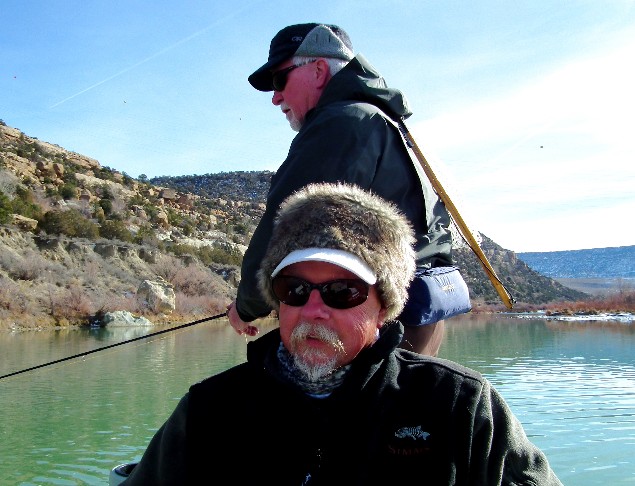
man in furry hat driving boat
Larry Johnson of Soaring Eagle Lodge rows while fishing buddy Tim McCarthy of Albuquerque fishes on the San Juan River in late December 2013.
 Johnson said despite the low flows this year anglers enjoyed great fishing in the Braids area due to improvements made there.

And there’s great fishing to be found right on the door step of the Gravel Pit take-out due to improvements in the area below Simon Canyon.

“Back in the old days we’d just row right through there without stopping, it was so dead,” he said.

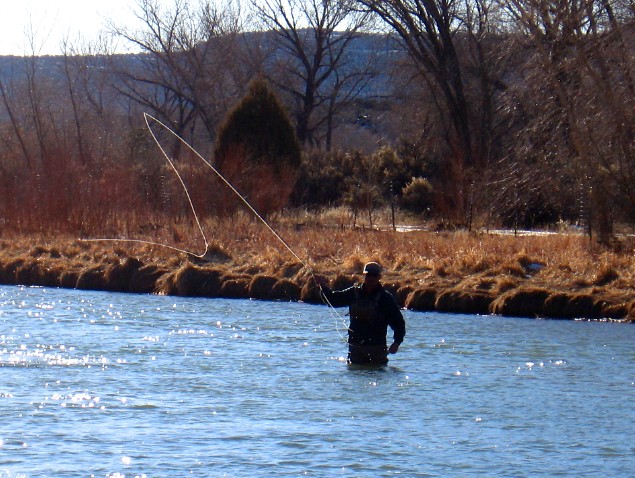
Now the river below Duranglers Corner features lots of fish and some of the best dry fly action on the river, Johnson said.

man casting a fly rod
An angler casts for trout in a rejuvenated area of the San Juan River below Duranglers Corner in 2013. Habitat improvements there have created excellent fishing with dry flies.
 And in the meantime Wethington is looking forward to see how well the department’s latest effort to improve fish and wildfowl habitat on the river’s back channels will work out.

The latest project involved narrowing and deepening the two back channels running between Texas Hole and the Lower Flats and on down to Baetis Bend to improve habitat for trout and angling for the public.

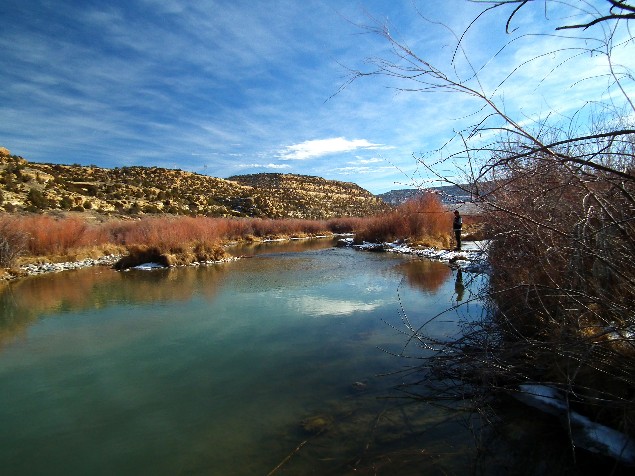
man standing by river
Marc Wethington, NMDGF Fisheris Biologist for the San Juan River below Navajo Dam in northwestern New Mexico surveys habitat improvements on the back channel below Texas Hole in December 2013.
 “It looks better now than it did at twice the flow,” Wethington remarked while inspecting the work recently.

Workers added cobble and other natural material to the banks to narrow the channel and dug out some of the pools to allow fish that find their way into the back channels to thrive there even under lower flows.

bank of river
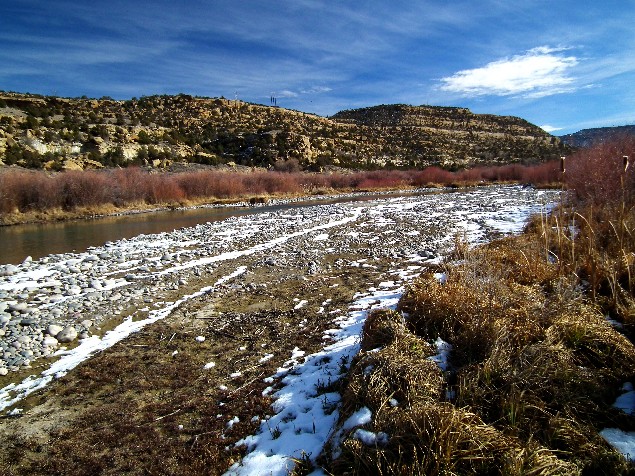
Cobble added to the back channel banks narrowed the channel to increase depth and provide better habitat for trout.
 And that means more fishing opportunities for anglers seeking to escape the crowds that one can expect to encounter on the state’s most popular trout fishery.

The same project also resulted in the expansion of a marsh upstream of the Baetis Bend parking lot where several interconnected ponds were created and native vegetation introduced to provide more wetland habitat for waterfowl.

man on rock in pond
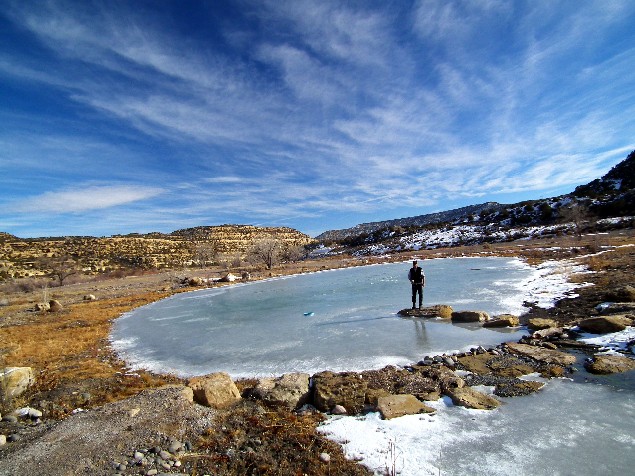
Marc Wethington, NMDGF Fisheries Biologist stands on a rock above one of several ponds created to benefit waterfowl near Baetis Bend on the San Juan River. Native vegetation such as willows, sedges and rushes were planted also and should begin to appear this spring.
 The wetland project should benefit bird watchers and hunters alike and might even hold fish someday, Wethington said.

But it may be the Department’s efforts some 14 miles downstream of Navajo Dam at the Hammond Tract that could prove to be the most alluring to anglers as it opens up a whole other stretch of river to fishing.

san juan river hammond tract
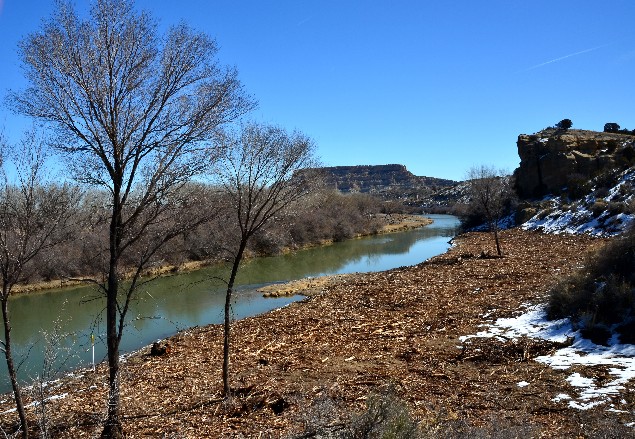
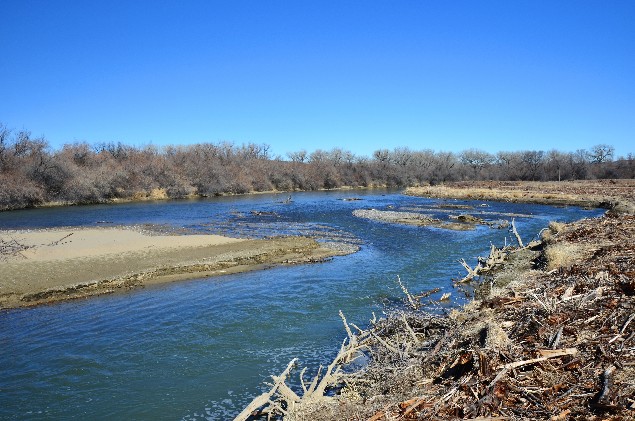
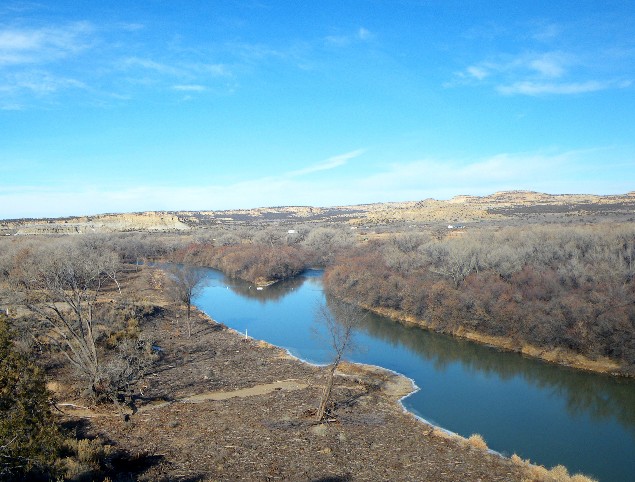
The far bank is what this area looked like before crews took to cutting down the Salt Cedar and Russian Olive trees last year.
 Since the late 1980s the department has owned an 80 acre parcel including about a mile of riverfront just upstream of the Hammond Diversion which had provided San Juan River boaters with a rudimentary takeout.

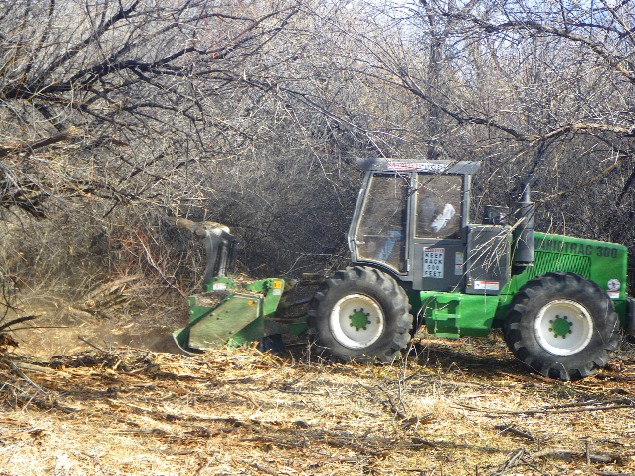
But the riverbank there has long been impenetrable due to dense stands of water robbing, non-native Salt Cedar and Russian Olive trees and the boat take-out was nothing more a small opening hacked through to the river.

mw & salt cedar stump
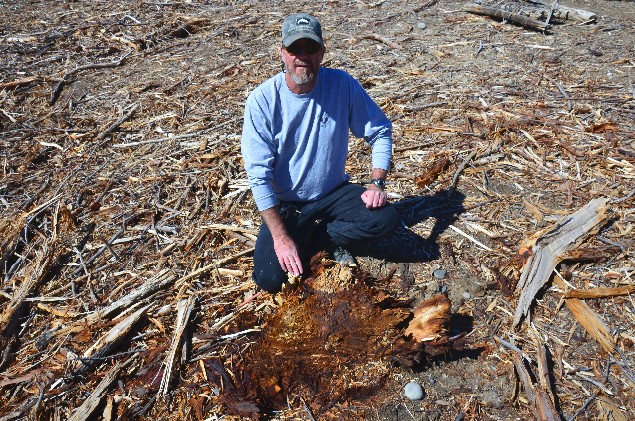
Marc Wethington of the NMDGF poses by the stump of what had been a huge salt cedar tree cut down on the riverbank of the San Juan River at the Hammond Tract in an effort to eliminate the water robbing, invasive species of trees and improve fishing access to the area.

Only the hardiest of die-hard anglers frequented this spot due to the conditions.

But last year work began on clearing the riverfront area of the invasive trees thanks to funding from the state forestry division. The work has since opened up the entire south bank of the river and continues on the north side this year.

Crews cut a swath through the dense underbrush and trees alongside the San Juan River at the Hammond Tract. Photo courtesy of Marc Wethington.
 The river at the Hammond take-out already features some pretty decent trout water but is slated to receive in-stream habitat improvements to make it even better.

san juan river hammond tract run
One of the nice runs at the Hammond Tract on the San Juan River.
 And the take-out and parking lot will be upgraded during the process also, Wethington added.

The far bank of the Hammond Tract on the San Juan River should be clear of the dense stand of invasive trees later this year and work will continue to install in-stream fish habitat  improvements and stocking to improve angling.
The far bank of the Hammond Tract on the San Juan River should be clear of the dense stand of invasive trees later this year and work will continue to install in-stream fish habitat improvements and stocking to improve angling on this revitalized section of the San Juan River.Photo courtesy of Marc Wethington, NMDGF.
 The projects are all part of an estimated $1.2 million in improvements the river has seen in recent years funded through federal taxes on fishing and boating equipment, state legislative appropriations and donations of manpower, equipment and money from the oil and gas industry and sporting and  conservation organizations.

The San Juan River has long been a top trout fishing destination for anglers due to a huge population of large trout of and many miles of public access.  The river’s draw brings in an estimated $40 million to the state’s economy annually, according to a New Mexico State University economic study.

karl moffatt and a san juan trout
The author shows off a fat San Juan Rainbow trout picked up on a dry fly during a Baetis hatch on the Lower Flats of the San Juan River in December 2013. Photo courtesy of Tim McCarthy.

Friday, September 27, 2013

Fall Fishing on the San Juan River - Tips and Tricks


 We were breaking ice that fall morning as we trudged through the marsh trail leading to the upper flats of the San Juan River.

And we were hoping we’d get one of the more favored fishing spots to ourselves because the fall is when this trophy, trout stream really grows busy.

It’s when long, warm, sunny, days draw droves of eager anglers to the river’s fabled, quality waters below Navajo Dam in northwestern New Mexico.

But with a little strategy, some patience and a bit of luck, a determined angler can still enjoy the best the river has to offer along with some solitude to savor it.

The first thing we did to improve our luck was to schedule our trip for mid-November when the weather might be a little more unstable but the competition’s a hell of a lot thinner.

September and October are typically some of the busiest months on the river but right after Halloween and with the passing of day light savings time, things slow considerably.

Our weather cooperated with several warm, sunny, days accompanied by clear, cold, nights while the river produced great midge hatches on the top end and fabulous Baetis outbreaks further downstream.

We had set out that Sunday morning to fish a stretch of the river between Cottonwood Campground and Simon Canyon where numerous habitat improvements had been installed in recent years and the dry fly fishing has been reported great since the work was done.

We hoped to get in on some of the action and parked next to an oil and gas rig just down the hill from the Dam Deli, Fly Shop and RV Park.

As we were putting on our gear a big Ford pickup sporting Colorado volunteer firefighter plates rolled up and parked right next to us. A couple of guys climbed down with their gear all ready to go and hurried off towards the river.

I called after them and asked if they thought there would be enough room on this side of the river for all of us and the big, beefy, driver just laughed back and said sure.

I was a little steamed at their jumping ahead of us like that so when we got down to the river and I found the truck’s passenger still standing there on the bank,  I walked up to him and asked him again if he thought there’d be enough room on this side of the river for all of us?

That guy seemed to get it and assured me that they’d make sure that we all had plenty of room and added that they could cross the river too.

So we left behind several goods runs and hiked upstream a ways before we started fishing.

This was one of the few drawbacks of the San Juan in the fall, it can get crowded and competitive, especially on the weekends.

While we were fishing this side of the river we spotted a crew of four anglers on the far bank, hiking downstream.

I looked back and saw the driver of the Ford pickup had crossed the river and was just wading into the water to fish the tail end of a series of rock structures over there.

His view of the anglers coming downstream was blocked by a wide, sweeping, bend in the river and thick stands of tall, dead, grass.

The group rounded the corner and pulled up upon seeing him and then then spread out in the water above him, taking the choice spots and leaving him nowhere to go upstream.

I smugly returned to my fishing and felt a tug on the line, the reel began to sing and a trout ran off with my rig.

When I looked up again after netting my trout I could see the angler who had worked so hard to get ahead of us was walking off downstream. Just an hour later the crew that ran him off wandered away too, leaving us a huge expanse of water to play in.

And we were rewarded for sticking it out that afternoon with a long running, Baetis hatch during which numerous trout residing around the rock habitat improvement structures rose to the surface with regularity.

We found that the currents flowing over, around and between the boulders formed by these habitat improvement structures could be challenging to negotiate with a dry fly but the results are spectacular for those who do.

Many trout rose to the fly including numerous browns of various lenghths and some big rainbows too.

We spent the remainder of the afternoon glued to this stretch of water, moving and expanding our reach as we picked off one rising trout after another.

We discovered when the sun was on the water that a #22, Parachute Adams worked fine and could easily be seen. But when it became cloudy and the water took on a glare, a Blue Wing Olive fly  sporting a dark, CDC , post was the answer, its dark silhouette standing out on the glassy surface.

And as the hatch waned, so did the sunlight, so we headed back to the truck.

It had been a productive day and other than a steady stream of drift boat guides passing through, we saw few other anglers in the area except for the initial mob that morning.

We dined that night at Navajo Dam’s newest café, a restaurant inside the Fisheads fly shop where the “Build Your Own Burger” is a good meal and not a bad deal.

We ended the evening by sitting around a crackling bonfire, having a beer and talking about old times while listening to KNX AM out of Los Angeles.

That night we slept soundly in doubled up sleeping bags nested atop thick air mattresses while our tents kept the frost at bay.

The next morning over instant coffee spiked with whiskey, we talked about the skimpy results we’d had during an earlier foray into the upper end of the river.

We decided to go back and give it another try.

But this time we would track down the state Game and Fish biologist stationed on the river, Marc Wethington, and ask him what the secret was to fishing the prolific midge hatches in the waters around the Upper Flats above Texas Hole.

Wethington, who does some guiding on the legendary river from time to time, shared with us his technique for capitalizing on the feeding frenzy that takes place during these upper river, midge hatches.

Wethington advised us against chasing those fish feeding off the surface because of the time consuming, technical difficulty involved and the limited success rate.

These fish are tempting targets, he noted, and some anglers love the challenge and special reward that comes from catching such heavily fished and easily spooked trout.

But at any given time, the vast majority of trout are feeding below the surface, he stressed.

We needed to concentrate on them if we wanted to be more productive in this stretch of water.

Wethington told us his typical set up for midge fishing during the fall is a basic black and red combo.

Any typical, black, midge pattern in size 22 through 28 tied below a similarly sized, red larva, Disco midge or Red Hot would work, he said.

Wethington said he prefers his black midges tied on a scud hook with a sparse, silver, wire wrap and a crystal flash wing tied in behind a black, dubbed head.

A red version of this same fly, referred to by some as a Disco midge, can also be used but with red thread substituted on the body and peacock herl used for the head. The silver wire wrap and crystal flash wings are used on this fly too.

And factory produced, red hooks wrapped in very thin, green, translucent micro tubing make for good red larvae while a red wrapped scud hook with a red bead head makes for a good Red Hot, he said.

Check the local shops for variations of these types of flies or whip up some samples of your own based on fly patterns found online.

And if the water is off-color, try substituting a small egg pattern in any number of colors for the top fly and use the other flies as droppers, Wethington said.

But the real key to fishing the upper water during these midge hatches is to keep the flies suspended off the bottom, up towards the middle of water column, where the trout are more likely to be feeding.

Many anglers make the mistake of using too much lead and dragging their flies along the bottom in these heavily fished upper waters, he says.

The use of a number 8, micro, split shot (0.06G) is essential for use in Wethington’s rig with the split shot riding about 10-inches above the top fly and the dropper fly tied about 10 to 12-inches below.

Tippet should be 6x or smaller.

The strike indicator is also important and it should be small like a Palsa pinch on or a small, Hot Head indicator which is placed another foot or two above the split shot and then adjusted for the depth of the water being fished, typically at about one and a half times the depth.

The bottom line is to use microscopic flies on light tackle and allow them to dead drift at varying heights through the water column, he said.

Wethington tied up one of his rigs for our rod and then offered one  last bit of parting advice, strike early and often and at any sign of hesitation, stoppage or dipping by the indicator.

And use a gentle hook set by just lifting the rod tip straight up so as to not pop out the very small, barbless, hooks, he added.

So as we broke through the ice that morning, my partner’s rod was all set to go with Wethington’s rig and we were confident about trying it out.

We hiked through the marsh until we pushed our way through the willows and emerged just above the upper flats where we found a shallow, slow moving side channel to our right, a couple of islands dead ahead of us and the main stem of the river to the far left.

We were all alone and immediately set out for the islands where we had seen anglers enjoying some success a few days earlier.

My partner took up position where a channel cuts between the two islands and rolled his rig into the water where we could see trout feeding below.

The strike was immediate, as was his disappointment, as he broke off the whole rig with a mighty jerk of the rod.

My buddy, a bass fisherman, was livid, even more so when I told him we didn’t have any more of those flies or the little weights because I’d mistakenly left them all back on the hood of the truck.

I was only kidding but he didn’t know that as I made a big show of searching my vest pockets and mumbling about my stupidity.

I soon ended the charade and we had a great morning fighting trout in the upper flats of the San Juan River with our newfound knowledge of how to fish there.

And it was a beautiful, fall day.  Warm and sunny with a piercing blue sky and very, few if any other anglers to distract us from our fishing on that weekday morning.

Tips and Tricks for Fall Fishing on the San Juan River:

Try to schedule your trip during the week but either way, the real battle will be the weather and your clothing.

You have to be able to accommodate extreme temperature swings and rapidly changing conditions. One minute it may be wet and windy and the next, sunny and warm.

Layers are essential, as is a fishing vest that can handle carrying some extra clothing.

At the very least a windbreaker or light raincoat over a fleece or wool sweater atop a thick sweatshirt should suffice. I like to wear a fleece vest too. Strip or add layers as required.

Bring along fingerless gloves to keep your hands warm and a warm beanie to pull over your baseball cap if it gets cold. Keep your feet and head warm as it is the best way to battle the cold.

Stash an extra change of the clothing back in your vehicle just in case you fall in, if you don’t, you probably will.

Wear polarized sunglasses so you can see through the water to the riverbed below and to also protect your eyes from the sun.

Thick, neoprene, waders are good if you intend to stand in one place for long as the San Juan is a consistently cold, tail water. The use of breathable waders will require a thick set of fleece pants or wool long johns underneath.

Those who like to hike and fish might be better off wearing a pair of hip waders over jeans with wool/synthetic long johns underneath.  The San Juan River is easily navigated in hip waders during the fall due to consistent, lower flows.

Remember to wear good, thick, socks made of wool, fleece or neoprene and leave your boots loose enough to allow blood and air to circulate.

Force yourself to drink plenty of water as the climate here will dehydrate you quickly. Limit alcohol and caffeine intake, both contribute to dehydration.

Energy bars, trail mix, beef jerky, cheese, peanuts, apples, etc. are all good foods to carry and keep you moving and warm.

Back at camp keep in mind the sun goes down early and it might be easier to whip up a can of stew or some chili rather than to fire up a grill and burn some steaks because they’ll grow cold fast and won’t be as soothing.

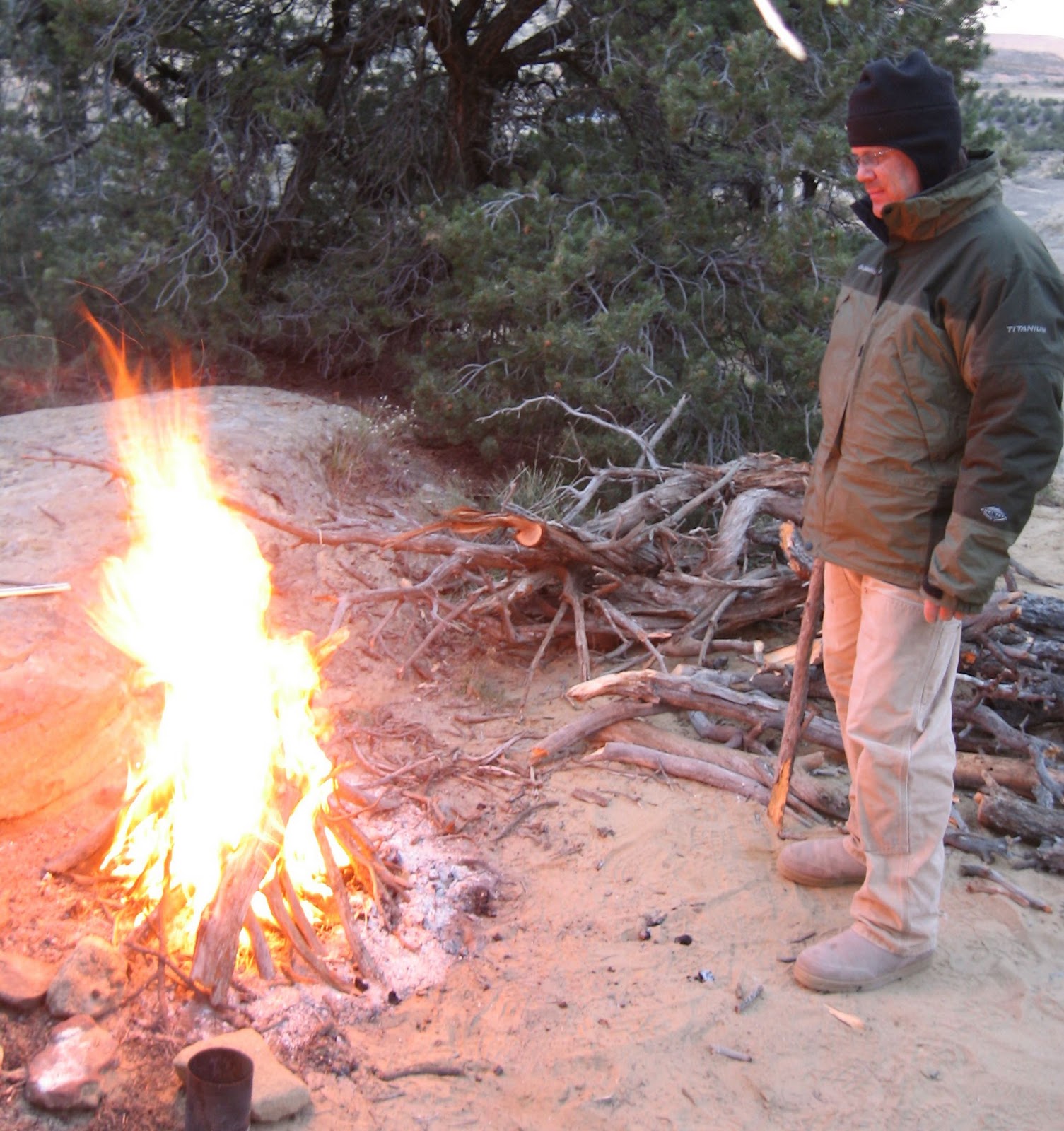
Don't pass up any loose firewood you come across, grab it because there's nothing like a good campfire to warm those tired bones and lift the spirits as the sun drops behind the mesa and the day fades away.

Carry a headlamp for hands free lighting and don’t forget the extra batteries.

Bring your beanie cap to bed to keep your head and ears warm overnight. Wear your fingerless gloves too, so you'll be comfortable while reading in bed. Don’t forget a good book, reading lamp, extra batteries and plenty of pillows.

Guys should keep an empty water bottle inside the tent; it'll save them the hassle of getting up in the middle of the night to take a whiz. Just don't mistake it in the morning for your other water bottle, the one you kept under your bags to keep from freezing so you can make coffee in the morning.

Bring along your wool/fleece booties or slippers, they make getting up in the morning a lot easier and are more comfortable to put on than a pair of cold, hard, hiking boots. Keep those long johns on too for wandering around camp.

Pack hot cocoa, tea, instant coffee, non dairy creamer, sugar, a small cooking pot and a good sized coffee mug so you can have a hot drink in the morning to get you going.

I use a burner and stand that attaches to one of those, one pound, propane canisters. It lights up quick, burns hot and lasts a long time. My wife turned me onto this and I haven't used my white gas stove much since.

Eat a good breakfast while you’re waiting for the river to warm up. You won’t regret it come noon when the fishing is kicking up and your stomach isn’t. Hard boiled eggs, cheese, apple slices and beef jerky make for an easy morning meal.

If it threatens to snow or rain during your trip, don’t cancel, as the San Juan River produces some of its best fishing during inclement weather.

If nasty weather threatens, try to get there before it hits, be there when it does, then leave after it passes. Rent a room if need be and enjoy the fishing and freedom a fall, storm can bring to the San Juan River.


Originally published in Outdoors New Mexico November 2011.
Saturday, August 24, 2013

Fire Ravaged Pecos River Reopens to Camping & Fishing

This church on the road to the Pecos River in the Santa Fe National Forest is a familiar sight to those heading into the canyon to fish and camp.
Anglers returning to the recently reopened Pecos River will find far fewer places to camp and fish as well as less trout to catch in the wake of two devastating forest fires earlier this summer.

“But it could have been a whole lot worse,” said Richard Hansen, Cold Water Fisheries Biologist for the state Department of Game and Fish (NMDGF) while inspecting the river at the department’s Mora recreation area last week. “The upper canyon is in pretty good shape so we’re stocking here again.”
Richard Hansen NMDGF Cold Water Fisheries Biologist.
The Tres Lagunas Fire erupted in late May from a downed power line in the canyon through which the Pecos River runs and scorched thousands of acres before it could be extinguished many weeks later.

The Jarosa Fire deep within the Pecos Wilderness also burned for weeks in the upper Pecos River watershed before it too could be brought to bear.

Then heavy summer rains brought on the floods sending torrents of unchecked water pushing rocks and burned timber down scorched hillsides and into the river on the canyon floor.
A washed out gully shows where runoff swept off the scorched mountainside and flooded out Brush Ranch.
Because of the fire and then the floods, authorities had kept the only road leading into the canyon closed along with the camping and fishing areas until just recently reopening some of them.

But even now a good portion of the lower rivers remains off limits until the threat of monsoon related flooding subsides.

“It’s just too dangerous,” says Steve Romero, Pecos & Las Vegas District Ranger for the Santa Fe National Forest. “We’ll be patrolling these areas and issuing citations if necessary.”

Visitors to the canyon north of the village of Pecos will find US Forest Service campgrounds and day use areas closed along an estimated 13-mile stretch of river between the town of Pecos and the village of Tererro.
A burned mountainside above the village of Terrero poses a threat for flooding until vegetation can take hold in the wake of Tres Lagunas fire.
Holy Ghost Canyon will remain closed also.

These areas are scheduled to remain closed until September 30 but could reopen sooner if conditions warrant, Romero said.

The NMDGF’s two camping and fishing areas in the burn area, Bert Clancy and Terrero, will remain closed also.

But the upper stretch of the Pecos River above Tererro is back open along with about six miles of river.
Kenneth Erickson, 36, of the state Department of Game and Fish's Lisboa Springs Fish Hatchery on the Pecos River empties a net full of nine-inch trout into the river at the department's Mora recreation area last week.
The NMDGF’s Mora and Jamie Koch camping and fishing areas along the river are open for use and stocking is taking place.

And in the surrounding national forest, visitors will still find Forest Road 305 and the Panchuela Campground closed, but Cowles, Jack’s Creek and Iron Gate campgrounds are open along with dispersed camping in the Davis Willow area.

For more details consult the Santa Fe National Forest webpages at http://www.fs.usda.gov.
State Department of Game and Fish workers will be stocking fish regularly in the upper canyon of the Pecos River now that it's been reopened to the public.
Anglers heading up to the Pecos will find the forest green and inviting until they come across the burn scar and flood damage easily seen at Brush Ranch.

“We were the bull’s eye,” said Bob Ingersol of the post fire mud slides that racked the resort, destroyed its fishing pond, buried habitat improvements in the river and killed many of their stocked trout. “Seeing all those beautiful fish suffocate and die just killed me.”
Josh Ingersol, Assistant Manager at Brush Ranch on the Pecos Rivers shows where tons of mud completely silted in what had been the ranch's showcase fishing hole at the entrance to the resort. 
Brush Ranch is a former summer camp converted to a fishing resort in the late 2000s by the Lujan family of Albuquerque and will remain closed for the rest of the season while repairs are underway.

Check out the resort’s website at http://www.brushranchnm.com/ to see remarkable photos of the flood damage.
Josh Ingersol stands in what had once been Brush Ranch's popular fishing pond stocked with monster trout. Flooding from the Tres Lagunas fire blew out the pond and washed away the fish. 
The same floods resembling chocolate syrup and bearing boulders and charred trees didn’t do the rest of the river downstream any good either but Hansen, the NMDGF fisheries biologist, remained optimistic.

“The Jemez looked about a 1,000 times worst after the Las Conchas Fire but somehow fish survived there,” he said.

The Las Conchas Fire of June 2011, also started by a downed power line, burned over 150,000 acres in and around the Jemez Mountains before it could be snuffed about a month later.

Hansen said he found insect life still present in the riverbed below Brush Ranch and even saw a couple of rising fish still in the water.

“In general it looks much better than I had been expecting to find,” he noted.
Stocked trout in the Pecos River mingle before spreading out in the clear waters of the upper canyon.
Hansen said he expects to be back on the river in the fall for a much more in-depth assessment, only further downstream at the Pecos National Historic Park where much of the silt and debris from the floods is thought to have ended up.
An angler on the River in the Pecos National Historical Park before the Tres Lagunas fire.
The national park’s highly popular fly-fishing program on the Pecos River flowing through its borders has since been suspended for the rest of the summer and the fall season too, says Superintendent Dennis Carruth.

“We just can’t chance having people down on the river in the event of a flash flood,” he said.
The road to Holy Ghost campground and summer homes remains closed until the threat of floods subsides while popular fishing areas below Terrero remained off limits too.
The fires, floods and closures have reduced what was once a highly popular fishing area to a shell of its former self and has really bit into one local fly shop’s business.

“We lost a lot of the tourist trade because of that closure,” said Ivan Valdez, Lead Guide and Assistant Manager at the Reel Life Fly Shop in Santa Fe. “And it’s been for months now and the season is winding down.”

Valdez said fishing in the upper canyon above Tererro is still “pretty sweet” but he expects that competition between guides and their clients and the rest of the fishing public will only get worse.

“It’s going to get real crowded up in there,” he said.
The ever popular Pecos River is loved to death by many seeking fishing and camping  in the cool pines  near Santa Fe.
But amid all the damage some good may come of it, some anglers say, as one of the state’s most heavily used and abused rivers may see less people and can rest and recover because of it.

If You Go: From Santa Fe take I-25 towards Las Vegas and take the Pecos exit into town. Head north on State Road 63 for about 13 miles to Tererro and then continue into the open areas.

Josh Ingersol hopes to see Brush Ranch cleaned up and open for business again by next season.

Wednesday, July 31, 2013

Charette Lakes: Hilltop Hide-Away a Great Get-Away!

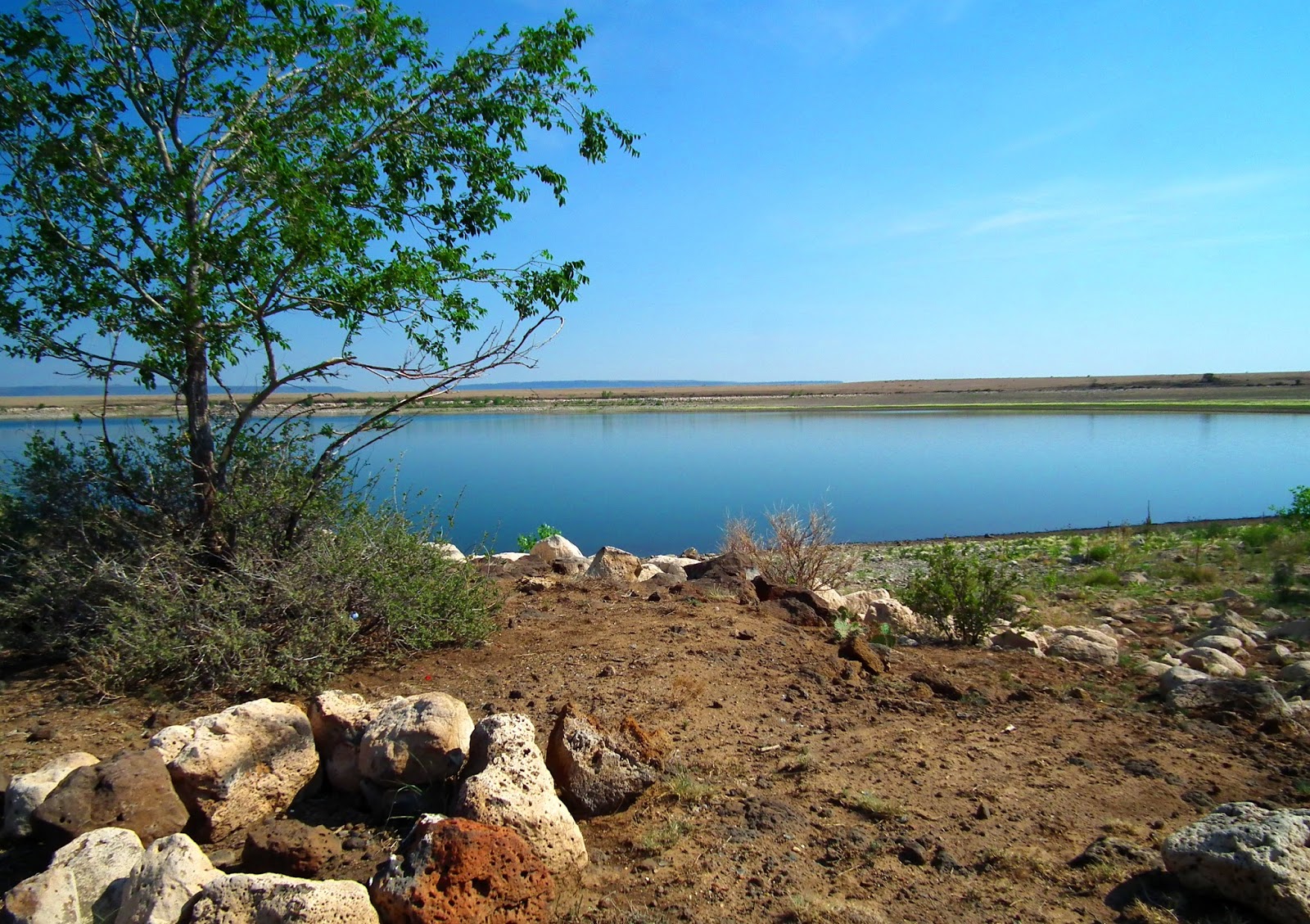
High on a windblown mesa overlooking the plains of New Mexico lies an unexpected oasis where visitors can camp and fish from the banks of a deep lake still thriving despite the long running drought.

“Charette Lake still holds plenty of water and fish,” says Clint Henson of the Department of Game and Fish’s northeast area office in Raton.”And not a lot of people get up there too often.”
The lakes are a great alternative for local anglers who have seen fishing opportunities in the area dwindle along with receding waters at popular spots such as Storrie, Morphy and Santa Rosa lakes.

Located about 15 miles off I-25 between Wagon Mound and Springer in northeast New Mexico the Charette Lakes refuge provides a remote haven for wildlife and humans alike.
Comprised of two lakes fed by ditch with water from nearby Ocate Creek the 2,000-acre refuge is owned and operated by the state Department of Game and Fish to benefit waterfowl and anglers.

The shallow, 100-acre upper lake has gone dry due to the drought but the much deeper and bigger lower lake has survived despite a lack of snowpack runoff and heavy summer rains over the past few years.
“It’s lower than I’ve ever seen it,” Henson says. “But it’s still in pretty good shape,”

The lower lake spans over 300 acres and is anywhere from 60 to 90 feet deep when at its fullest.

But Henson says the lake level looks like it has dropped about 30 feet over the last few years.

Recent monsoon rains should help bring it back up some, he adds.

The lower lake has always boasted a good population of trout, perch, and waterfowl while pronghorn and other wildlife have also made the refuge home.

During a recent mid-week overnight visit there was no one else to be found camping around the rocky shoreline where colorful cactus flowers bloomed and antelope grazed amid the grass.
Trees are few and far between here and visitors will need to bring their own shade. There is also no drinking water to be had so packing in a good supply is essential.

There are numerous concrete picnic tables, sturdy vault toilets and fairly level camp sites strategically situated around the lake for public use.
While taking in the views of the distant mountains and outlying plains a visitor might conclude that the mesa-top lakes would be a remarkable place to watch a far off thunderstorm as it launched lightning bolts across the sky.

But during the author’s visit it was a couple of rising trout in a cove at dusk that provided plenty of entertainment as they toyed with a fishing fly resembling a grasshopper I repeatedly cast out and danced across the surface.
According to the angler’s bible, “Fishing in New Mexico” by Ti Piper, fishing during the summer can be trying as the trout are holding in the deeper water and biting their best just at dawn.

Unfortunately the receding shoreline left the boat ramp out of the water and getting a small boat armed with a fish finder out onto the lake to get at them could be a problem.
But a canoe or float tube will still work well here under the current conditions and even fishing from the shore was fairly easy due to the lack of trees and other vegetation to foul up a cast.

Fly fishing anglers might want to try a damsel fly pattern or a stimulator trailing an ant on the surface or fishing bigger nymphs real deep.
Charette Lakes are best fished in the fall with a woolly booger or gray-hackled peacock fly suspended below a bubble and cast out onto the lake with a spinning rod, according to Piper.

But the real beauty of this place might be the lack of company and space to breath.
Even if you’re not catching fish you could be reading a good book under an awning while enjoying a cold beer and occasionally watching the antelope play. The weather alone here makes for good viewing.

Those who like to explore will find a deep canyon off the southeast corner of the lake through which the creek flows and the dry surface of the upper lake might be of interest to some, too.
It should be noted that this looks like rattlesnake country, so don’t go poking around under rocks. There’s also the very real threat of lightning strikes up on the exposed mesa but little to be done about it other than huddle in a vehicle.

Bring everything you will need when you go because it’s a long way back to town. You’ll also need to pack out what you brought in.
The refuge is open to fishing March 1 through October 31 and is free to use for those holding a current hunting, fishing or Gaining Access Into Nature (GAIN) permit.

The history behind the lakes is murky but some details were discovered during an online search.

The state Game Commission purchased the lakes and water rights in 1949 from an irrigation company apparently created by land speculators who were selling farms on the edge of the plains to settlers.
The settlers were being lured to the area by the promise of a rail line being built at the nearby town of Colmor and running straight out across the plains to Kansas.

The rail line would allow trains to save time and avoid the laborious climb over Raton pass to ship cattle and timber to the railheads in Kansas.

The railroad laid track to within about 35 miles of the town before World War II erupted and put an end to the ambitious plan. The tracks were then pulled up and melted down for scrap metal for the war effort.

The town of Colmor, so named due to its location straddling the Mora and Colfax county lines, is now a ghost town with its ruins on private land still visible off the frontage road between Wagon Mound and the Charette Lakes turnoff.

Charette Lakes may be named after a French trapper and trader as a mountain man-era pack trail ran within three miles of the lakes which are formed from natural depressions in the volcanic rock.
If You Go: Take I-25 about 60 miles north of Las Vegas to the St. Rd 569 exit located between Wagon Mound and Springer. The gravel road crosses private ranch land and then turns to pavement as it wends its way to the top of the mesa. Great views of the plains from the side of the road at the top of the mesa.


Popular Posts