Wednesday, March 18, 2015

New & Improved Eagle Rock Lake & Red River in the Works!

Dredging of Eagle Rock Lake at Questa NM.
Construction of a new fishing park at Eagle Rock Lake near Questa and in-stream fish habitat improvements at the Red River fish hatchery are scheduled to begin soon with completion expected this summer.

“This is pretty exciting,” says Nick Streit of Taos Fly Shop. “It’s going to be a popular place.”

Both projects are scheduled to be done by the end of June and will help promote angling and tourism in the area, says Eric Frey, Sport Fish Program Manager for the New Mexico Department of Game and Fish (NMDGF).

Chevron Mining construction crews are already dredging the lake to remove contaminated silt and sediment from the bottom before installing a new clay and sand based liner.

Installation of new lake and riverside trails, bridges and in-stream fish habitat improvements will begin shortly, Frey said.
Anglers will be able to fish both the Red River and Eagle Rock Lake while enjoying a great setting. 
And when it’s all done the lake will be stocked with trout from the nearby Red River fish hatchery.

“It’ll be a very, nice aquatic park in a beautiful setting that folks can really enjoy while fishing,” Frey said.

Downstream at the hatchery construction will begin at the same time to create in-stream fish habitat improvements on the river just above and below the facility, Frey said.

In-stream habitat improvements typically involve adding rocks, tree trunks and reconfiguring the streambed to provide better places for fish to live which in turn benefits anglers.

Featureless runs like this at the Red Fishery fish hatchery will be modified to provide better fish habitat and improved angling conditions.
“There two projects will tie in nicely and make the area much more attractive to anglers,” Frey said.

Campers will find numerous streamside Forest Service campgrounds just upstream of the lake between Questa and Red River and several primitive sites along the road to the hatchery too.

Eagle Rock Lake is just outside of Questa and should be a real help to the village’s economy, says Questa’s Tourism Director, Alberta Bouyer.

“This is a real plus for us as we transition from a mining based economy to one more focused on outdoor recreation and tourism,” Bouyer said.

Questa village leaders have decided its time to tap into the tourism and outdoor recreation market.
The longtime molybdenum mine at Questa had sustained the local economy for generations but it shut down for good last June due to poor market conditions.

So now the village is in the process of reinventing itself.

“We’re a small, historic village surrounded by unspoiled wilderness and that’s what makes us unique,” she said. “And this will really help as we work to promote ourselves as one of the best fishing, hiking and camping destinations in the state.”

For more info about Questa and what it has to offer see their website at www.questa-nm.com.

Centrally located businesses like the Tewa Lounge and Village Stop and Go could benefit if more visitors stopped in the village while traveling through the area. 
Bouyer said Questa is now working hard on several fronts to develop its economy to better serve those who come to the area to get away from it all.

Questa is uniquely situated in the midst of the Rio Grande del Norte National Monument, the Hondo/ Columbine Wilderness, the Carson National Forest and nearby Costilla Park, Latir Wilderness and the Valle Vidal.

John Bailey, manager of the monument for the Bureau of Land Management (BLM) said he is working with the village on the possibility of jointly manning a visitor center in the center of Questa to better serve visitors of the area.
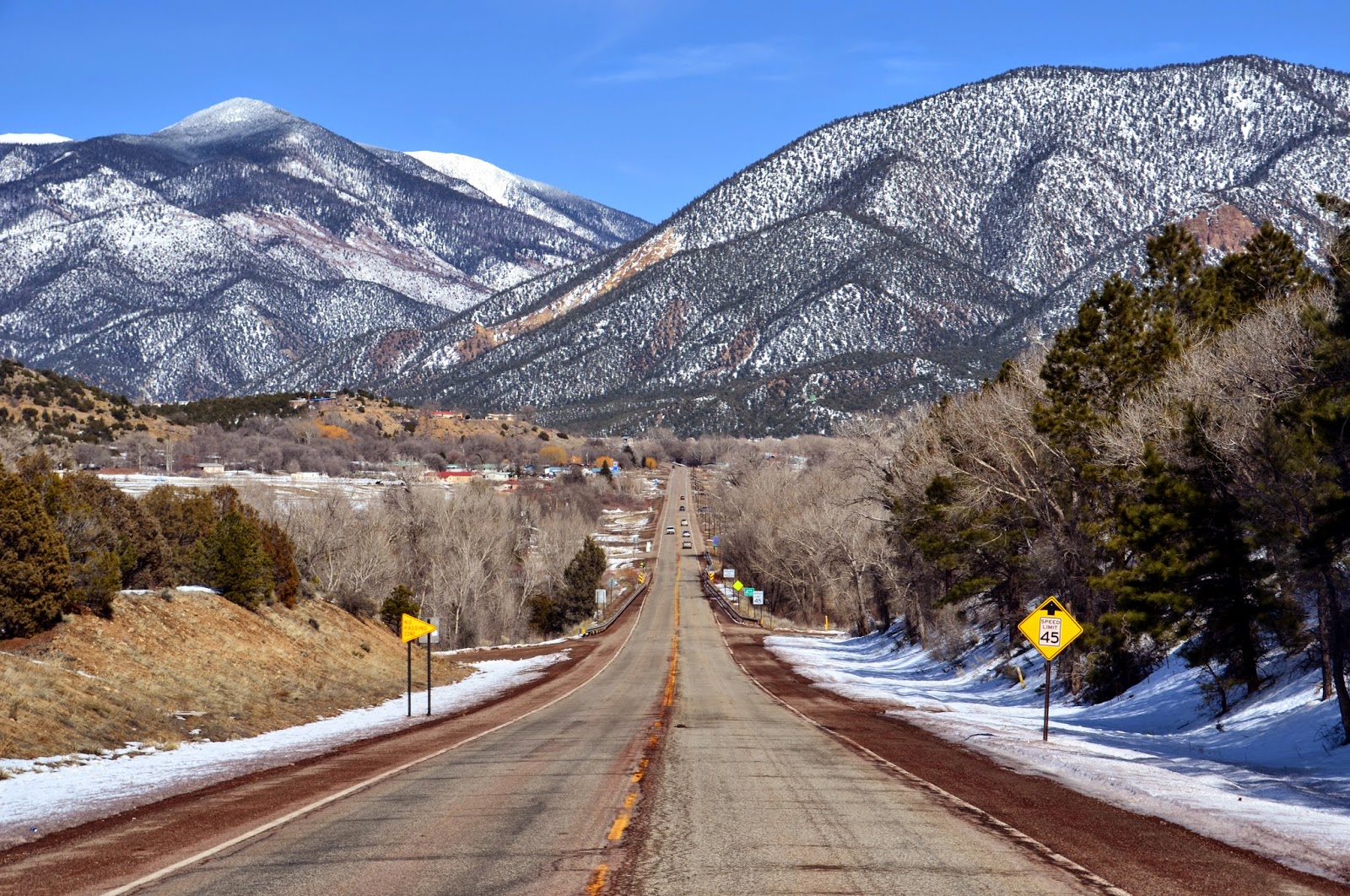
The high mountains above Questa provide many outdoor recreational opportunities for those seeking to hunt, fish, camp, hike or just enjoy northern New Mexico's spectacular scenery. 
But in the meantime  the new fishing park and improvements on the river  should go a long way towards bringing more anglers to the area, says Streit.

“We’ve been working on this for years and it’s exciting to see this finally getting off the ground,” said Streit who is also a member of the local chapter of Trout Unlimited.

Trout Unlimited, Questa Economic Development Board, Chevron, BLM and the US Forest Service all played a role in developing the project, Frey said.

NMDGF picked up the $800,000 tab for construction of the two projects using proceeds from habitat stamps bought by anglers when obtaining a state fishing license, Frey said.

Apple Mountain Construction of Estancia and Riverbed Engineering of Albuquerque are doing the site work job while dredging of the lake is being handled by Chevron Mining Inc. which owns the now closed mine.

The Red River has rebounded nicely from past contamination from mining activities and now supports resident population of feisty brown trout and is regularly stocked with rainbow trout from the hatchery.
Steve Miller, 75, of Embudo enjoys a mild winter's day of fly fishing on the Red River downstream of the fish hatchery in 2015.
Nearby the Rio Grande gorge within the national monument continues to provide anglers with excellent fishing for wild rainbow and cutthroat trout with plenty of developed camp sites available along the rim above.

Anglers venturing to the area will find a pretty good selection of traditional fishing supplies at Questa Lumber and Hardware next door to the village supermarket. The nearest fly shops are in Taos or Red River.

Anglers who like lake fishing in a high mountain setting will find 15-acre Cabresto Lake where brook and cutthroat trout can be caught just up the road from Questa.

Anglers venturing into the area are asked to stay out of the construction zones at the Eagle Rock Lake and the Red River Fish Hatchery until work is completed by the end of June.
The Red River Fish Hatchery near Questa NM.


Sunday, February 22, 2015

Winter Fishing on the San Juan - Bring it On!

There's a reason savvy travelers love the off-season and the same goes for those who love to fish, especially on the fabled San Juan River in northwest New Mexico.

“I really like the winter fishing here because you don't have the crowds and you can fish pretty much anywhere you want,” says Mark Wethington, a state Department of Game and Fish biologist stationed on the San Juan River at Navajo Dam. “And what's so nice about New Mexico, you get a lot of really nice sunny days between November and March.”

I met up with Wethington during one winter fishing trip to the San Juan River. He was out counting beaver dams and I was chasing trout, we both had little or no competition on the river that day.

And, sure enough, the day started out sunny and warm, and the fishing was fine.
But as can be expected on the San Juan River in the winter, the wind kicked up, the clouds rolled in, and it turned cold, as did the fishing.

So we hiked back to the parking lot where the conversation turned to the much anticipated resumption of the annual spring release of irrigation water from Navajo Dam.

Several years of drought has severely reduced the amount of water typically sent downstream each spring and the river, the fish, and the bugs they eat have suffered some because of it.

“But we'll get a big flush this year,” Wethington said. “And it'll really benefit the river by pushing downstream a lot of the sediment that's been deposited over the last four years. It's needed and should really improve the aquatic life and fish habitat.”

The Bureau of Reclamation, which operates the dam, is expected in April to start increasing its release of water from the dam from a current level of 350 cubic feet per second to a high of five thousand cfs by May. It will be maintained for several weeks at that level until dropping again to 350 cfs.

The big flush, a man-made version of nature's own spring runoff, would blow out the river and mark the beginning of the official fishing season on the San Juan river.

The drift boat guides, the tackle shop owners, and the summertime anglers will be wringing their hands with glee. The flush is expected to stir things up good, including a lot of bottom-hugging lunkers.

But for me there'll be no more long days of hiking and fishing the river without fear of heatstroke.

No more hanging out in the parking lot at the end of the day, having a cold beer and realizing you don't have any ice and really don't need it.

It'll be the end of no waiting for a table at the cantina and dinner served up hot, fast, and friendly.

And there'll certainly be no more rolling into the campground at dusk and having my pick of the sites and finding a pile of leftover firewood to boot.

Those are just some of the primary reasons for fishing the San Juan in the winter, but there are others, too.

Like just lying down at streamside and letting the winter sun warm your face while layers of wool, canvas, and rubber keep the cold and wind at bay.

Or letting the dog roam free without worrying someone might think she's a stray and take her home when I'm not looking.

And then there's the occasional thrill of a big brown trout snatching my drifting-egg pattern off the bottom and running clear upstream and across to the other bank in a big show of strength.

And one more thing, maybe the best, is watching a snow squall roll in.

As the water darkens, the Bae tis begin to hatch, and the fish begin to rise.

They come up slowly, sipping the fluttering bugs off the surface, and now you can tie on a dry fly.

It's what fly fishing the San Juan River is all about.

Big fish on small, dry flies smack dab in the middle of the winter. It's why you'll see so many out of state plates in the parking lots.

I guess the only real problem I can think of with winter fishing on the San Juan River is there's rarely anyone else around to witness your good luck.

Originally published in the Sandoval Signpost, April 2005.


If you go winter fishing on the San Juan River:

Try to drive up in clear weather and don't worry about it once you get there.

From Albuquerque take I-25 to 550 in Bernalillo and it's about a two-hundred-mile trip through a lot of remote, rural, Indian country with the little town of Cuba providing a good, half way, rest stop. Save your appetite and stop at El Bruno's for classic New Mexican fare at an old, family owned local restaurant that does it right.

Everything you need for a sucessfull trip the San Juan River including fishing licenses, gear, equipment, food, and lodging—can be had at Navajo Dam, that's all they do there.

Just bring your checkbook.

Otherwise, take all the equipment and winter gear you've got and sort it all out once you get there.

You'll probably want to bring a pair of neoprene waders because this water is cold. Breathable waders will work, just bring long johns and a pair of thick fleece pants to wear underneath. And don't forget to bring a couple pairs of good thick wool socks for your feet.

Don't skimp on clothing. It can be sunny and warm one minute and windy, cold, and wet the next. Dress in layers with lots of polar fleece or wool and top it all off with a good windbreaker/raincoat to ward off the wind.

A wool watch cap or fleece beanie will be useful for pulling down over your baseball cap. Take a pair of fingerless gloves too. Just remember to push up your sleeves and remove your gloves before working with a wet,netted fish.

Wear a baseball cap and polarized sunglasses to ward off the sun, and most importantly, don't fall in the water. If you do, quickly return to your vehicle and get out of those wet clothes fast. Pack an extra outfit for these occasions because if you don't, you'll need them.

To stay warm and keep your motor humming eat plenty of energy foods like trail bars, beef jerky, peanuts, candy cars, dried fruit, etc.


It's also important to stay hydrated and because of the cold, you'll have to force yourself to take in adequate amount of water. A water purifier makes life on the river easier while a flask of whiskey makes it a lot more enjoyable.

One last thing, bring and use lip balm and skin lotion, the wind, sun and cold will result in cracked, painfull chapped lips and burnt skin that only shows up days later when it's too late to prevent it. Don't be a fool, use the tool!

And don't be afraid to camp out, it's not as cold as you think, and once you're inside a couple of sleeping bags, you'll warm up fine. I find a couple of hand warmers in the bottom of the bag help keep the foot area toasty.

Bring your beanie to bed to keep your head and ears warm through the night and your fingerless gloves too, so you'll be comfortable while reading. Don't forget that book and a reading light.

And guys, keep an empty water bottle inside the tent, it'll save you the hassle of getting up in the middle of the night to take a piss. Just don't mistake it in the morning for your other water bottle, the one you kept under your bags so it wouldn't freeze.

And don't forget a headlamp and extra batteries, it gets dark here early and bumbling around with a flashlight clamped between your teeth gets old real fast.

That's why in the winter I shun a lot of cooking and opt instead for heating up a can of Campbell's Chunky soup, Dinty Moore beef stew or a can of Hatch Brand green chile stew.

Just don't forget a box of crackers, you'll want them for sure.

Pack hot cocoa, tea, instant coffee, non dairy creamer, sugar, a small cooking pot and a good sized coffee mug so you can have a hot drink in the morning to get you going.

I use a burner and stand that attaches to those one pound, propane canisters and it lights up quick, burns hot and lasts a long time. My wife turned me onto these and I haven't used my white gas stove much since.

And lastly don't pass up any loose firewood you come across, grab it because there's nothing like a roaring campfire to warm those tired bones and lift the spirits as the sun drops behind the mesa and the day fade away.

On the way home make an adventure of it by taking the back way. It tacks about fifty miles on to the drive home to Albuquerque, but makes for a more scenic and memorable trip.

Head up to and over Navajo Dam to US 64 for the trip home through Dulce, Chama, Abiquiu, EspaƱola and Santa Fe. Need I say more.

For a great meal stop in EspaƱola at the first light on the edge of town, Fairview Lane, and take a left towards the river. You'll see Angelina's restaurant just down the hill and on the right at the corner of Railroad Ave. The organic lamb chops here are to die for, as is any of the traditional New Mexican food offered by this longtime, fabled, family owned, eatery.

Friday, January 30, 2015

Annual Hunting & Fishing Show Returns!

Soaring Eagle Lodge Proprietor Larry Johnson and Chef Michael Williams talk  to attendees at a past outdoor show. 
The annual midwinter hunting and fishing show is back after being cancelled last year following the death of its founder Bob Gerding.

“We’re thrilled to be reviving the annual outdoor adventure show and carrying on the tradition that Bob started so many years ago,” says Lance Cherry, Chief of Information and Education for the New Mexico Department of Game and Fish (NMDGF).

The department has taken over the show with the Gerding family’s blessings and has since slashed by half all booth rental and admission prices.


And anyone under 18 or presenting a valid hunting, fishing or trappers license will get in for free, too.

“It’s more about continuing to promote New Mexico’s great outdoors and wildlife than making a profit,” Cherry says of the reduced fees.

And that’s welcome news to those working in New Mexico’s $6.6 million-a-year outdoor recreational industry.

“We’re thrilled to see them continuing Bob’s legacy,” says Clarissa Lopez of Espanola, author of the “old school” angling guide “Fisher Chick” and a custom maker of distinctive fishing lures. “It provides us great exposure while bringing together everybody who loves our great outdoors.”

Clarissa Lopez of Fisher-Chick.
The show on Valentine’s Day weekend, Feb. 14 and 15th, will feature many of the same vendors as found in years past including hunting and fishing guides, lodges, outfitters, artists, firearm and archery equipment sales people, recreational vehicles, campers and non-profit organizations dedicated to the outdoors, Cherry says.

The revival of the show means a lot to the Gerding family, says Dick Gerding, Bob’s twin brother and a prominent Farmington attorney.

“We’re very pleased that it’s going to continue, the show was one of his happiest accomplishments,” Dick Gerding said.

Putting on the annual show for the past 15 years was a Gerding family tradition during which everyone, including wives, brothers, sons, daughters and grandkids worked, Gerding said.

Bob Gerding was known for personally greeting many of those who attended his show and his presence will be sadly missed at this year’s event, Gerding said. 

Outdoor show founder Bob Gerding.
Gerding may be gone but he’s certainly not forgotten as since his death in December 2013 at the age of 75, the Natural Resources building on the state fairgrounds has been named in his honor along with the catch and release pond at Tingley Beach.

Gerding can also still be seen in many NMDGF videos posted on the department’s You Tube page at www.youtube.com/user/NMGameandFish. And event organizers are planning a tribute to Gerding during the show, too.

Gerding’s longtime fishing buddy, TJ Trout of 94 Rock fame, said just reviving the show is a great tribute to the man whom he came to know and love.

“I met him while he was working the counter at Charlie’s Sporting Goods,” Trout says. “There was always a line of folks waiting to talk to him because he was the Yoda of fly fishing in New Mexico. He even turned me on to it.”

Trout says he asked Gerding to come on his radio show to talk fishing one day and after he did the two became improbable friends.

TJ Trout and Bob Gerding pose with a really  big fish. Photo courtesy of city of Albuquerque.
Gerding appeared regularly on Trout’s show while also conducting a call-in fishing show once a week on KRQE Channel 13’s noon newscast. He was also the longtime host of NMDGF’s television and video shows “Wild New Mexico” and “New Mexico Wildlife” and even penned a couple of books about fly fishing and fly tying.

But it was his many years working the counter at Charlie’s Sporting Goods and his annual hunting and fishing show that Gerding may have been best known for, says Ryan Garrett, President of the New Mexico Wildlife Foundation, a non-profit, support organization for NMDGF.

“I took fly tying classes with him at Charlie’s and went to the outdoor show as a kid growing up in Albuquerque,” Garrett says. “So it’s a great honor to help carry on that legacy.”

At its height Bob Gerding’s annual outdoor show featured over 100 vendors with close to 10,000 visitors and was the place to be in mid-February.

New Mexico plays host to an estimated 160,000 resident and nonresident anglers who spend $268 million a year while fishing and some 87,600 hunters spend another $345.5 million a year while hunting, according to a recent NMDGF commissioned study of the industry.

Hunters and anglers also support more than 7,900 jobs in New Mexico that provide more than $267 million in labor income which translates into about $51 million in state and local revenues. The full study including county by county analysis can be seen at http://www.wildlife.state.nm.us/download/publications/press-release/NMDGF-Economics-of-Fishing-Hunting-and-Trapping-Final.pdf

New Mexico Wildlife Foundation is assisting NMDGF in producing this year’s show and will also be holding a benefit banquet the evening of opening day where over a dozen premiere hunting and fishing packages will be auctioned off to benefit New Mexico’s wildlife, Garrett said. See the foundation’s website at www.nmwildlifefoundation.com for more info.

The New Mexico Outdoor Adventures Hunting & Fishing Show runs Feb. 14-15, 2015 at Expo New Mexico in the Manuel Lujan Building. The event will be open to the public Saturday, 9 a.m. to 5 p.m. and Sunday, 10 a.m. to 4 p.m. Admission to the show will be $3 for adults or free to youth under the age of 18 or anyone who hold a valid hunting, fishing or furbearer license.

For more info see the department’s website at www.wildlife.state.nm.us.


Saturday, January 10, 2015

Ice Fishing Opens at Eagle Nest Lake

Nancy Loritsch of Eagle Nest shows off a nice trout caught while ice fishing recently at the lake in northern New Mexico. Photo courtesy of Nancy Loritsch.
Eagle Nest lake is now open to ice fishing with anglers catching perch and trout and having a great time while they’re at it.

“We had a pretty good crowd of happy anglers on opening day last Saturday (Jan. 3, 2015)” said Marshall Garcia, superintendent at Eagle Nest Lake State Park. “Now we’ll just have to see how long it’ll last.”

Last year the lake was only open to ice fishing for three weeks before unseasonably warm weather, wind and waves conspired to break up the ice.

“So think cold,” Garcia suggested.

A recent week-long cold snap featuring subzero temperatures created the ice a few weeks earlier than normal this year, Garcia said.

The lake will remain open to ice fishing as long as it maintains a thickness of at least 9 inches.

And with New Mexico’s wacky winter weather of late running between bitter cold and snow one day to sunny, t-shirt weather the next, who knows how long this ice will last.

As of this week ice fishing was also available at Bluewater and Surgarite State Parks, according to the NM State Parks announcements page on their website.

Ice fishing in New Mexico is a traditional winter sport that requires little more than a great desire to be outside and some rudimentary fishing equipment.

For tips and tricks on ice fishing see this related article found on our sister site at www.outdoorsnewmexico.com.

 The lake's annual ice fishing tournament is back after being cancelled last year due to warm weather and bad ice. It is scheduled for Feb. 7, 2015 and should be lots of fun with plenty of prizes available. Follow the link for more info.
http://www.enl-cc-parkfriends.org/activities.htm


Thursday, December 04, 2014

Pecos River on the Mend Latest Fish Count Shows

State Department of Game and Fish staff assisted by volunteers from the Truchas Chapter of Trout Unlimited search for fish in the Pecos River at the Pecos National Historical Park (PNHP) in October 2014. Photo courtesy of Bill Zenger.
The fire and flood ravaged Pecos River is on the mend with evidence of trout moving back into devastated areas to help revive the popular fishery.

“It’s recovering and we’re optimistic it’ll come back around in another year or two,” said Richard Hansen, Cold Water Fisheries Supervisor for the state Department of Game and Fish (NMDGF) following a recent survey of the river. “It looks much healthier than it did last year.”

The river suffered a major blow in the wake of the big Tres Lagunas Fire last May when summer rains raced off blackened, barren hillsides and flooded the river with mud, ash and debris. 

Native fish and insects were smothered in the onslaught and the river was essentially dead for many miles. 

Sept. 2013 Flooding on Glorieta Creek, a tributary that joins the Pecos River just below the Forked Lightning Ranch House within the park. Photo Courtesy of PNHP.
The fire and flooding caused so much damage downstream at the Pecos National Historical Park that its popular fly fishing program had to be suspended after a post fire NMDGF survey found only one small trout in three miles of river within the park. 

A previous survey of the same water in 2010 revealed about 250 trout in those three miles, Hansen said.

An angler fishes on the Pecos River below the Forked Lightning Ranch House at PHNP back in 2010. ODNM File Photo.
The angling program will remain suspended until conditions improve, said Park Superintendent, Karl Cordova.

In the meantime the survey conducted this October by NMDGF staff and volunteers from the Truchas Chapter of Trout Unlimited showed some promising signs of recovery on the river , said Art Volmer, Vice President of the club of about 500 members.

“There’s still lots of sediment in some of the deeper holes and it’s not anywhere near what it was.” Volmer said of the river and trout population in the park. “But generally speaking things looked pretty good.”

Silt, sediment and other fire debris smothered the Pecos River in the wake of the  Tres Lagunas fire last summer.
The survey crew found plenty of bugs in the water, a variety of species of fish including stocked rainbow and natural reproducing brown trout and bait fish like chubs, dace and sucker fish as well.

The fall survey discovered 29 fish of varying sizes including a 14-incher among some 16 Brown trout found, Hansen of NMDGF said. The crew also discovered 13 Rainbow trout of which the largest was a 17-incher, he added.

One of the Brown trout found by crews surveying the Pecos River  within the Pecos National Historical Park in October 2014.
Hansen said it was his understanding that the two private ranches just above and below the park’s boundaries stock Rainbow trout for recreational fishing purposes and that some of those fish may have migrated into the park.

National Park Service policy precludes the park from stocking non-native game fish such as Brown or Rainbow trout in its waters and the river’s condition is not suitable for stocking with native Rio Grande Cutthroat trout, Cordova said.

Which is why the survey crew found it most encouraging when they came across evidence of spawning activity by resident Brown trout, Volmer said. 

The crew found a freshly created “Redd” where a fish had cleared off an area in the gravel streambed upon which to lay eggs.

Volmer said he would like to see some restoration and improvements to the fishing habitat in the park while the river is on the mend.

Volmer suggested that the placement of rock structures in the water to improve depth and flow could help move sediment along and the planting of shady cottonwood trees along the banks could also help cool the river during hot summer months which would be beneficial to the trout.

Cordova said no such projects are currently in the works but that he looks forward to working with TU in the future on issues regarding the river’s health.

Mark Cordova at Casa Grande Ruins National Monument. Photo courtesy of Joey Chenoweth of the Coolidge Examiner.
Cordova is the park’s new superintendent having taken over in July. He hails from Pueblo Colorado and is a 22-year veteran of the National Park Service.

Cordova most recently served at Casa Grande Ruins National Monument in southern Arizona. Prior to that he served at Rocky Mountain National Park and did a two stint in Washington DC as a legislative Affairs Specialist.

Cordova’s first posting was to Yellowstone National Park and he holds a Bachelor’s Degree in Outdoor Recreation and a Master’s Degree in Park and Protected Area Management from Colorado State University in Fort Collins. He is married and the father of two sons ages 10 and 12 and lives with his family in El Dorado.

The NMDGF survey also took in other areas of the Pecos River devastated by the fire including the Windy Bridge recreation area where crews found 38 Brown trout compared with 103 during the last survey in 2004, Hansen said.

At another stretch of the river adjacent to the department’s Lisboa Springs Fish Hatchery crews found 9 Brown trout compared with 117 since the last survey in 2004, Hansen said.

Richard Hansen, NMDGF Cold Water Fisheries Supervisor. 
But while the overall number of fish may be way down the fact that Brown trout are back in these damaged areas is encouraging, Hansen said.

Brown trout were stocked in New Mexico waters at one time but haven’t been in decades so their presence is a good sign that the resident trout are reproducing and repopulating in those damaged areas of the river, Hansen said.

These areas may see some additional stocking with Rainbow trout to supplement angling opportunities now that water and streambed conditions there have improved, Hansen said.

NMDGF only stocks non-reproducing hybrid Rainbow trout in part to reduce crossbreeding with native Cutthroat trout that are being reintroduced throughout many areas of the state.

Volmer of the Truchas Chapter of Trout Unlimited urged the angling public to release any Brown trout caught from the Pecos River in the fire damaged areas to help the resident Brown trout population rebound.

NMDGF Staff stock rainbow trout in the Pecos River at the Jamie Koch Recreation Area at the confluence of the Pecos River and Willow Creek last summer.
In the meantime anglers will find that the upper stretches of the Pecos River above Tererro have been heavily stocked by NMDGF and continue to provide anglers with plenty of opportunities to catch fish. 

And barring any further environmental disasters anglers may find the lower Pecos has rebounded to its old self within just a few more years, Hansen said.

Read more about the fire and its effect on the Pecos River and the park's fishing program at:


Popular Posts